





What's Happening?
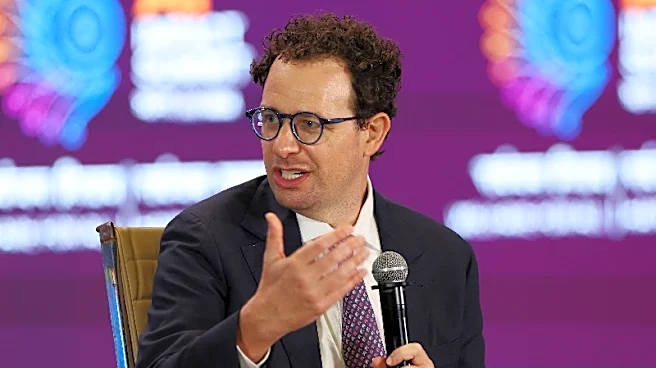
Dario Amodei, CEO of Anthropic, engaged in an extended interview with Jo Ling Kent to address the critical responsibilities of the artificial intelligence community. The discussion centered on the ethical and societal implications as AI technology continues
its rapid advancement. Amodei emphasized the need for the AI sector to proactively consider the broader impact of its innovations, particularly as AI systems become more sophisticated and integrated into various aspects of daily life. The conversation highlighted the challenges and obligations faced by developers and researchers in ensuring that AI development proceeds in a manner that benefits humanity while mitigating potential risks. This interview underscores a growing recognition within the AI industry of the importance of responsible innovation and foresight in technological progress.
Why It's Important?
The dialogue surrounding the AI community's responsibility is crucial as artificial intelligence transitions from theoretical concepts to practical applications with significant real-world consequences. Rapid advancements in AI, including large language models and autonomous systems, present both immense opportunities and considerable risks, such as job displacement, ethical dilemmas in decision-making, and potential misuse. Amodei's perspective, as a leader in the field, signals a commitment from some industry players to engage with these complex issues rather than solely focusing on technological progress. This proactive approach is vital for building public trust, shaping regulatory frameworks, and ensuring that AI development aligns with societal values. Without a strong emphasis on responsibility, the rapid evolution of AI could lead to unforeseen negative outcomes, impacting various sectors from the economy to national security and individual privacy.
What's Next?
Discussions like the one with Dario Amodei are likely to intensify as AI capabilities continue to expand. The AI community is expected to further engage in self-regulation efforts, develop industry best practices, and collaborate with policymakers to establish appropriate guidelines and safeguards. This could involve creating more robust ethical AI frameworks, investing in AI safety research, and fostering greater transparency in AI development and deployment. We may also see increased calls for interdisciplinary collaboration, bringing together AI experts with ethicists, social scientists, and legal scholars to address the multifaceted challenges posed by advanced AI. The ongoing conversation will shape public perception, influence investment priorities, and ultimately determine the trajectory of AI's integration into society, with potential impacts on legislation and international cooperation in AI governance.
Beyond the Headlines
The conversation about AI responsibility delves into profound ethical and philosophical questions about the nature of intelligence, autonomy, and human control over advanced technologies. As AI systems become more capable, the line between tool and agent blurs, raising questions about accountability when AI makes critical decisions. This extends beyond technical safeguards to fundamental societal shifts, including how we define work, creativity, and even human identity in an AI-augmented world. The 'responsibility' discussed by Amodei also touches upon the power dynamics inherent in technological development; who controls these powerful tools, and whose values are embedded within them? Addressing these deeper implications requires not just technological solutions but also a broad societal dialogue, educational initiatives, and a re-evaluation of existing legal and ethical paradigms to ensure that AI serves humanity's best interests in the long term.