






What's Happening?
Superior Court Judge Bryan Collins has issued a landmark ruling stating that the State of North Carolina failed to meet its constitutional obligation to protect the state's coastal fisheries. This decision stems from a 2020 lawsuit filed by the Coastal
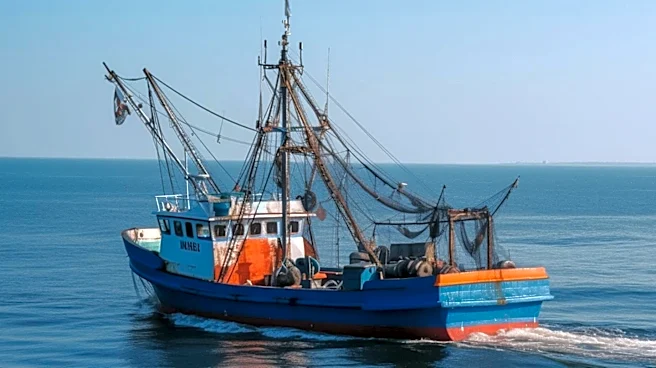
Conservation Association of North Carolina (CCA), which argued that decades of mismanagement and unsustainable commercial fishing practices, particularly shrimp trawling and overfishing, have severely depleted the state's fish stocks. The CCA specifically highlighted that trawl nets unintentionally catch large numbers of juvenile finfish as bycatch. Other conservation organizations, such as the North Carolina Wildlife Federation, supported these claims, asserting that the state's current system has not adequately managed fisheries for the benefit of all citizens and future generations. Commercial shrimpers, however, have countered these arguments, suggesting that factors like pollution and runoff also contribute to declining fish populations.
Why It's Important?
This ruling carries significant implications for North Carolina's coastal environment, economy, and regulatory framework. It affirms the constitutional responsibility of the state to safeguard its natural resources, setting a precedent for environmental protection and resource management. The decision could lead to substantial changes in commercial fishing regulations, potentially impacting the livelihoods of commercial shrimpers and the broader seafood industry in the state. Conversely, it offers a potential victory for conservation efforts, aiming to restore depleted fish populations and ensure the long-term sustainability of marine ecosystems. The debate between commercial interests and environmental protection is a recurring theme in U.S. resource management, and this ruling highlights the judiciary's role in mediating such conflicts. The outcome will likely influence future legislative actions and enforcement of environmental laws, potentially leading to stricter controls on fishing practices and greater investment in marine conservation.
What's Next?
With Judge Collins having ruled on the underlying claims, the immediate next step is for the court to determine the appropriate remedy. This could involve a range of actions, from imposing new regulations on fishing practices, such as restrictions on shrimp trawling, to mandating specific conservation measures. The decision may also prompt renewed legislative debate, as lawmakers previously considered banning inshore shrimp trawling but dropped the proposal after protests from commercial fishermen. Stakeholders, including commercial fishing associations, environmental groups, and state agencies, will likely engage in further legal and political discussions to shape the implementation of the court's remedy. The ruling could also encourage similar lawsuits in other states facing challenges in managing their coastal fisheries, potentially leading to broader changes in national marine resource policies.
Beyond the Headlines
The North Carolina fisheries ruling underscores a deeper tension between economic activity and ecological preservation, a challenge faced by many coastal states. The depletion of fish stocks is not merely an environmental issue but also a matter of economic justice and cultural heritage for communities reliant on fishing. The court's emphasis on the state's constitutional obligation highlights a fundamental principle of public trust doctrine, where natural resources are held in trust for the benefit of current and future generations. This case could catalyze a re-evaluation of how economic development is balanced with environmental stewardship, pushing for more integrated approaches that consider both ecological health and community well-being. It also brings to light the complexities of scientific consensus versus industry perspectives in environmental policy, and the role of legal frameworks in resolving these disputes to ensure sustainable practices.