





What's Happening?
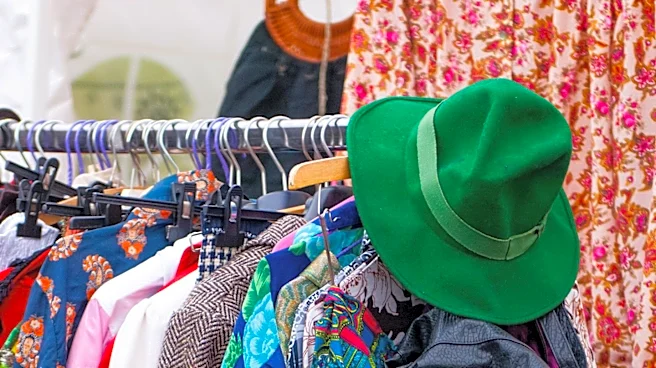
A recent six-month study conducted by Eunomia and Mepex tracked 200 discarded garments from five Nordic countries, revealing the extensive and often opaque international journeys of second-hand clothes. The research found that items collected in Denmark
and Norway, for instance, traveled through multiple European countries like Poland and Lithuania before reaching destinations such as Nigeria and Togo. This study offers a detailed look into a largely unregulated global trade, coinciding with the European Union's efforts to introduce new regulations aimed at enhancing textile collection, reuse, and recycling. The findings indicate that while textile exports play a role in extending garment lifespans, there are significant challenges related to the quality of clothes being circulated. Lower-quality garments were more likely to end up outside Europe, with 56% of Grade D items having their last recorded location outside the continent, compared to 24% of Grade A items.
Why It's Important?
This study is crucial as it sheds light on the environmental and economic implications of the global second-hand clothing trade, particularly concerning the quality of textiles. The influx of 'fast fashion' items into charity shops, as noted by Vita Ellis, a Sustainability Consultant at Eunomia, highlights a decline in the durability of clothes, which impacts both first-hand and second-hand markets. The EU's upcoming regulations, including the revised Waste Framework Directive requiring extended producer-responsibility schemes for textiles by April 2028, aim to address these issues. These schemes will mandate producers to contribute to the financing of textile collection, sorting, and treatment. The research underscores that simply increasing collection volumes will not reduce textile waste if the garments are too poor in quality for reuse, emphasizing the need for better manufacturing practices and more durable textiles. This shift could influence global textile supply chains and consumer behavior, promoting more sustainable fashion choices.
What's Next?
The EU is preparing to implement new rules to improve textile collection, reuse, and recycling, with the revised Waste Framework Directive set to establish extended producer-responsibility schemes for textiles by April 2028. These schemes will require producers to finance the collection, sorting, and treatment of textile waste. Policymakers are also considering measures to improve the quality and durability of textiles, potentially through ecodesign regulations that could include recycled content targets and designs that facilitate repair. The report recommends expanding regional recycling capacity, enhancing checks on exported clothing, and utilizing producer-responsibility funding to support reuse and repair initiatives. For consumers, these changes could lead to higher quality clothing available in both new and second-hand markets. The ongoing discussions within the EU aim to address the broader question of how to reduce textile waste effectively by ensuring garments are of sufficient quality for reuse.
Beyond the Headlines
The study's findings extend beyond mere logistics, touching upon ethical and environmental concerns related to textile waste and global inequalities. The long journeys of discarded garments, particularly lower-quality items ending up in African markets, raise questions about the true sustainability of the second-hand clothing trade. While reuse is generally positive, the export of poor-quality 'fast fashion' items can burden recipient countries with textile waste that is difficult to manage or recycle. This highlights a potential 'waste colonialism' where wealthier nations offload their textile waste onto less developed ones. The push for better manufacturing and more durable textiles by the EU could foster a more circular economy, but it also necessitates a re-evaluation of consumer habits and the rapid production cycles of the fashion industry. The ethical dimension also involves ensuring fair trade practices and preventing the exploitation of markets in developing countries for textile disposal.