



What's Happening?
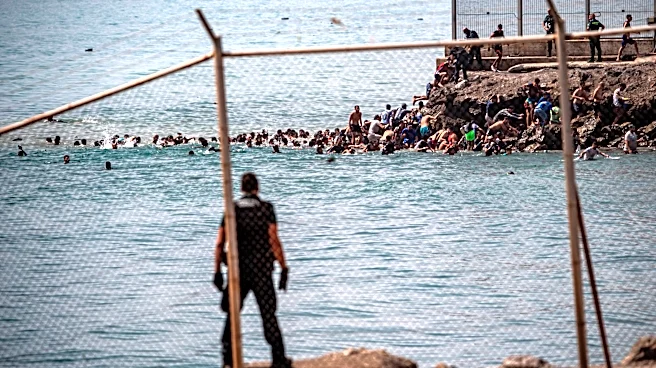
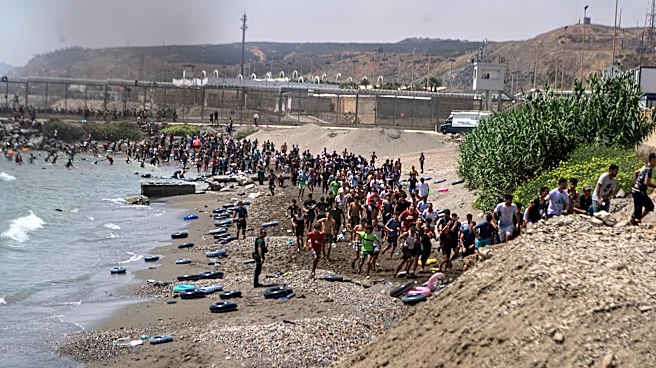
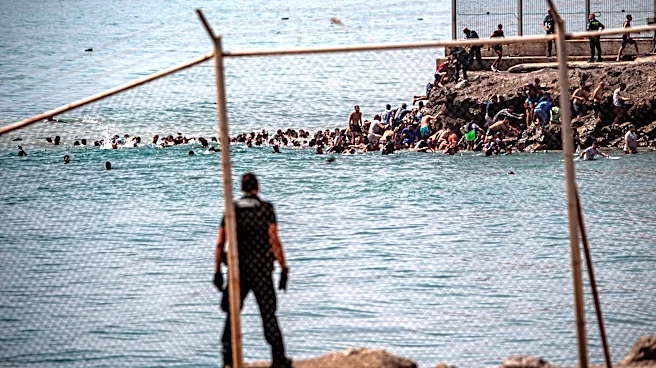
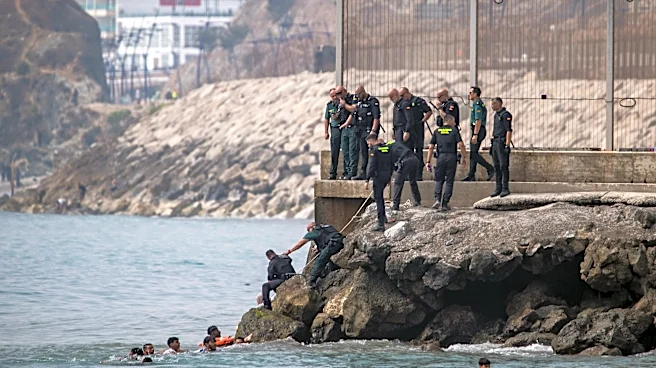
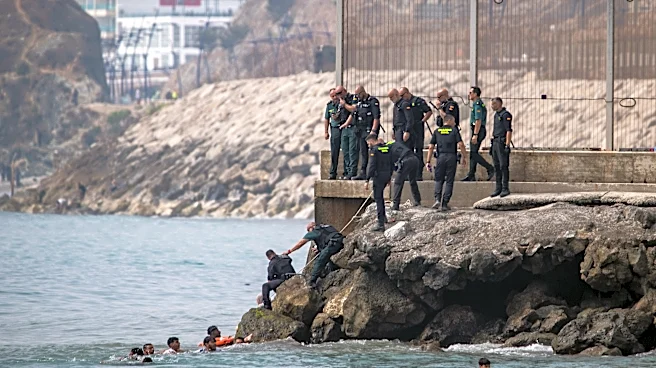
In recent days, over 1,500 migrants have swum from Morocco to the Spanish territory of Ceuta, overwhelming local border security and reception facilities. The influx has led to overcrowded conditions, with many migrants, including minors, sleeping outside
due to the lack of space in reception centers. This situation has prompted calls for a national emergency and potential military intervention to manage the crisis. The timing of these crossings follows a meeting between Spanish Prime Minister Pedro Sánchez and Algerian President Abdelmadjid Tebboune, drawing parallels to a similar crisis in May 2021 when over 8,000 migrants entered Ceuta in two days. The Spanish Supreme Court recently ruled that migrants arriving by sea cannot be immediately returned without due process, unlike those crossing by land, which some believe may have influenced the surge.
Why It's Important?
The current situation in Ceuta highlights ongoing challenges in managing migration flows and border security in Europe. The crisis underscores the strain on local resources and the potential for diplomatic tensions between Spain and Morocco. The Spanish government's response, including potential military involvement, could set precedents for handling similar situations in the future. Additionally, the legal implications of the Spanish Supreme Court's ruling on migrant returns may influence migration patterns and policies across the region. The humanitarian aspect, with migrants risking their lives to reach Europe, also raises ethical concerns about the treatment and rights of asylum seekers.
What's Next?
The Spanish government may consider deploying additional resources, including military support, to manage the situation in Ceuta. Diplomatic discussions between Spain and Morocco could be crucial in addressing the root causes of the migration surge and preventing future crises. The upcoming migration report from Spain's interior ministry may provide further insights into the scale of the issue and inform policy decisions. International organizations and human rights groups are likely to monitor the situation closely, advocating for humane treatment of migrants and adherence to international asylum laws.