



What's Happening?
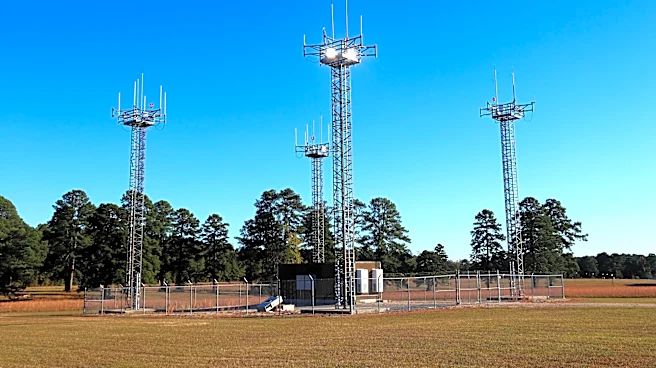
US lawmakers have achieved a bipartisan, bicameral agreement in principle regarding crucial aviation safety reforms. This agreement, announced on November 17, 2026, mandates that civilian aircraft equipped with ADS-B Out technology must also receive surrounding
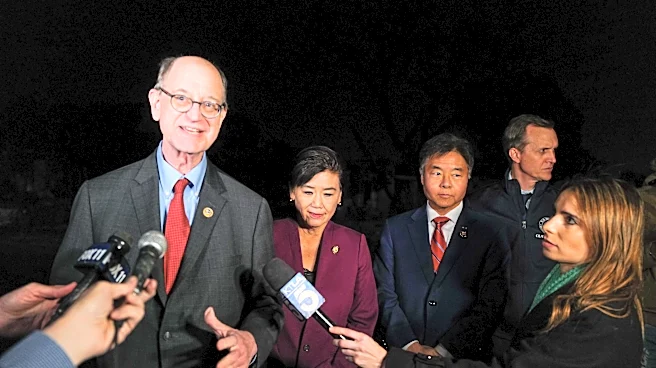
aircraft location signals via ADS-B In technology. The consensus was reached by House Transportation and Infrastructure Committee Chairman Sam Graves and Ranking Member Rick Larsen, alongside Senate Commerce, Science, and Transportation Committee Chairman Ted Cruz and Ranking Member Maria Cantwell. This legislative development stems from recommendations by the National Transportation Safety Board (NTSB) following its investigation into a January 2025 midair collision near Ronald Reagan Washington National Airport (DCA). The proposed requirement aims to enhance pilots' situational awareness and aid in collision avoidance by allowing equipped aircraft to receive information about nearby air traffic. While the civil aviation provisions are agreed upon, discussions are ongoing with the House and Senate Armed Services Committees regarding military aviation aspects.
Why It's Important?
This agreement marks a significant step forward in enhancing aviation safety within the United States. The mandate for ADS-B In technology is expected to drastically improve pilots' ability to detect and avoid other aircraft, potentially preventing future midair collisions. The NTSB has advocated for mandatory ADS-B In requirements for over two decades, underscoring the technology's critical role in air traffic awareness. The bipartisan nature of this agreement highlights a unified commitment among lawmakers to address safety gaps exposed by recent incidents. The legislation's passage would directly impact the aviation industry, requiring upgrades for many aircraft and potentially influencing manufacturing and maintenance sectors. For the flying public, this reform promises a safer air travel experience, restoring confidence in the civil aviation system following the tragic 2025 collision.
What's Next?
Lawmakers are continuing to work towards finalizing a comprehensive House-Senate bill for signing into law before the end of the current Congress. The immediate next step involves resolving outstanding provisions related to military aircraft operations in civilian airspace, which are currently under discussion with the House and Senate Armed Services Committees. Once these military aspects are agreed upon, the full legislative package will proceed through the congressional process for final passage and enactment. Stakeholders, including the FAA, aviation safety organizations, and victims' families, will likely monitor these final negotiations closely. The implementation timeline for the ADS-B In mandate, once enacted, will also be a critical next phase, impacting aircraft owners and operators who will need to comply with the new requirements.
Beyond the Headlines
The push for this legislation extends beyond immediate safety improvements, touching upon broader themes of technological integration in critical infrastructure and inter-agency coordination. The January 2025 collision, involving a civilian aircraft and a military helicopter that was not transmitting its position, highlighted complex issues surrounding shared airspace and differing operational protocols between civil and military aviation. The ongoing negotiations with the Armed Services Committees underscore the delicate balance between national security concerns and public safety in shared airspace. This legislative effort could set a precedent for how future technological advancements are mandated across various sectors to enhance safety, potentially influencing regulations in other transportation modes. Furthermore, the emphasis on victims' families' advocacy in driving legislative change highlights the significant role of public engagement in shaping policy.