



What's Happening?
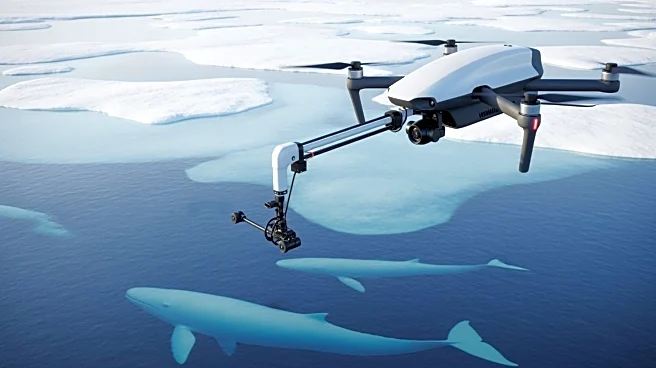
Researchers have utilized drones to collect samples from the exhaled breath of humpback, sperm, and fin whales in the Arctic region, marking a significant advancement in non-invasive health monitoring. This method has led to the first detection of cetacean
morbillivirus, a highly pathogenic virus, in whales above the Arctic Circle. The study, involving institutions such as King's College London and Nord University, highlights the importance of ongoing pathogen surveillance to inform whale conservation efforts. The findings also include the presence of herpesviruses, though avian influenza and Brucella were not detected. The research underscores the need for continued monitoring as these pathogens can cause severe diseases and interact with other environmental stressors.
Why It's Important?
The discovery of cetacean morbillivirus in Arctic whales is significant as it poses a threat to marine mammal populations, potentially leading to mass mortality events. This virus, known for causing severe respiratory, neurological, and immune damage, highlights the vulnerability of Arctic ecosystems to emerging pathogens. The use of drones for non-invasive sampling represents a breakthrough in wildlife health monitoring, allowing researchers to gather critical data without harming the animals. This approach could enhance conservation strategies by providing early warnings of emerging threats, thereby helping to protect marine biodiversity in rapidly changing Arctic environments.
What's Next?
The study emphasizes the need for long-term surveillance of whale health in the Arctic, particularly as environmental changes continue to impact the region. Researchers plan to use these methods to monitor how multiple stressors, including climate change and human activities, affect whale populations. The findings may prompt increased collaboration among international conservation groups and governments to address the risks posed by pathogens in marine ecosystems. Additionally, the research could lead to the development of new policies aimed at mitigating the impact of diseases on vulnerable species.