





What's Happening?
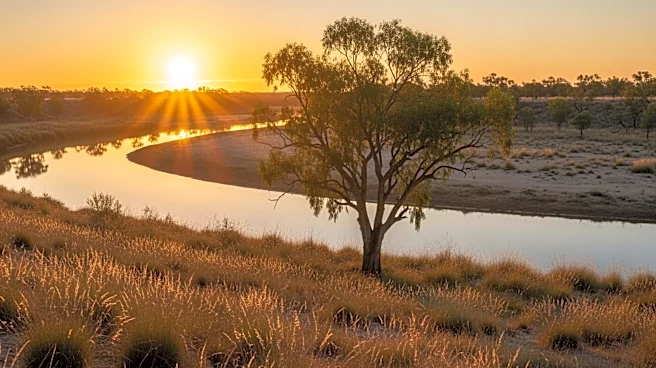
Bullo River Station, a 400,000-acre property in Australia's Northern Territory, is pioneering a model that combines luxury hospitality with large-scale conservation efforts. Owned by Julian and Alexandra Burt, the station has entered a 10-year conservation agreement
with the Australian Wildlife Conservancy (AWC) to protect 142,000 hectares of its land. This partnership focuses on biodiversity monitoring, research, and management of invasive species. The remaining land supports cattle and hospitality operations, attracting guests with its unique blend of natural beauty and conservation-focused tourism. The station is also transitioning to a solar-diesel hybrid grid to reduce its carbon footprint and operational costs.
Why It's Important?
The integration of conservation and luxury tourism at Bullo River Station represents a significant shift in how land is utilized and valued in Australia. By prioritizing environmental sustainability, the station not only preserves biodiversity but also enhances its appeal to eco-conscious travelers. This approach could serve as a model for other properties, demonstrating that environmental stewardship can coexist with profitable tourism. The station's efforts contribute to the broader trend of valuing land for its ecological health rather than just its agricultural output, potentially influencing policy and business practices in the region.
What's Next?
Bullo River Station is undergoing a redevelopment of its guest facilities, set to reopen in 2027. The continued focus on sustainability includes increasing solar power generation and water capture capabilities. As the station enhances its infrastructure, it aims to attract more visitors interested in conservation and luxury experiences. The success of this model could encourage similar initiatives across Australia, promoting a balance between economic development and environmental preservation.
Beyond the Headlines
The station's conservation efforts may pave the way for the emerging market of biodiversity credits, where landowners can monetize conservation successes. By improving native species populations and reducing land degradation, Bullo River Station could become a leader in natural capital. This shift reflects a broader change in how land value is assessed, emphasizing ecological health and sustainability over traditional agricultural metrics.