



What's Happening?
U.S. Rep. Brian Mast (R-FL) has introduced legislation aimed at accelerating the process for American veterans to obtain a commercial driver’s license (CDL). The bill, named the Freedom Haulers bill, seeks to codify an initiative previously announced
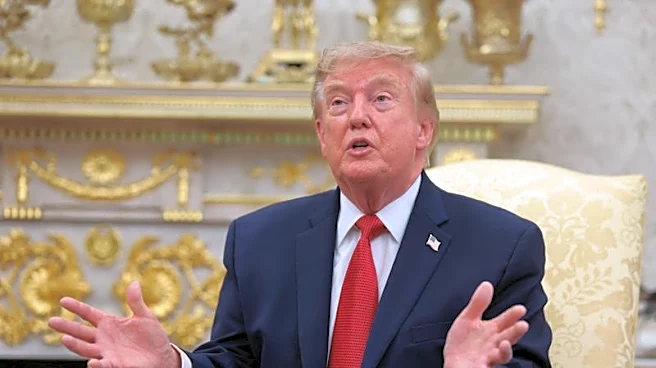
by President Trump, which aims to connect veterans with well-paying careers in the trucking industry. The initiative was unveiled at a White House press conference that included U.S. Transportation Secretary Sean Duffy, VA Secretary Doug Collins, and Acting Labor Secretary Keith Sonderling. Officials noted that trucker earnings have increased by 7.42 percent under President Trump's administration, and traffic fatalities have decreased. The proposed legislation would extend the Military Skills Test Waiver window from 12 months to 24 months post-service, allowing veterans with military heavy vehicle experience to transfer their skills without undergoing redundant road tests. Over 40,000 veterans have already utilized this waiver. Additionally, the bill would enable qualified veterans to bypass CDL knowledge exams, thereby expediting their licensing process. Representative Mast emphasized that veterans possess the discipline, training, and grit required for demanding jobs, making them ideal candidates for hauling America's freight.
Why It's Important?
This legislation is significant for several reasons, primarily addressing the ongoing shortage of commercial truck drivers in the United States while simultaneously supporting veterans' transition to civilian life. By streamlining the CDL acquisition process, the bill aims to quickly integrate a skilled and disciplined workforce into a critical sector of the U.S. economy. The trucking industry is vital for the supply chain, and a shortage of drivers can lead to increased shipping costs, delays, and broader economic impacts. For veterans, this bill offers a direct pathway to stable, well-paying jobs, leveraging their existing military training and experience. This can reduce unemployment rates among veterans and provide them with economic security. Furthermore, by placing veterans, whom Representative Mast describes as having earned America's trust, behind the wheel, the legislation also aims to enhance road safety by replacing potentially unqualified drivers with experienced and disciplined individuals. The initiative aligns with broader efforts to support veterans and strengthen the national workforce.
What's Next?
The Freedom Haulers bill will now proceed through the legislative process in the U.S. House of Representatives, where it will be subject to committee review, potential amendments, and a vote. If passed by the House, it would then move to the Senate for consideration. Should it pass both chambers, it would be sent to the President for signature into law. If enacted, the legislation would permanently extend the Military Skills Test Waiver window and allow qualified veterans to bypass CDL knowledge exams, significantly altering the pathway for veterans into the trucking industry. This could lead to a measurable increase in the number of veteran truck drivers, potentially alleviating some of the industry's workforce shortages. Stakeholders, including veterans' advocacy groups, trucking associations, and the Department of Transportation, will likely monitor the bill's progress closely and work to implement its provisions if it becomes law.
Beyond the Headlines
Beyond its immediate impact on veterans and the trucking industry, this legislation highlights a broader policy trend of leveraging military experience to address civilian workforce needs. It underscores the value placed on the skills and discipline acquired during military service and seeks to create more efficient mechanisms for translating those skills into civilian careers. This approach not only benefits veterans by providing employment opportunities but also strengthens critical national industries. The bill also touches upon the ongoing debate about workforce development and the role of government in facilitating career transitions, particularly for specific demographic groups. The success of such initiatives could pave the way for similar programs in other sectors facing labor shortages, further integrating military veterans into the national economy and recognizing their unique contributions beyond their service.