





What's Happening?
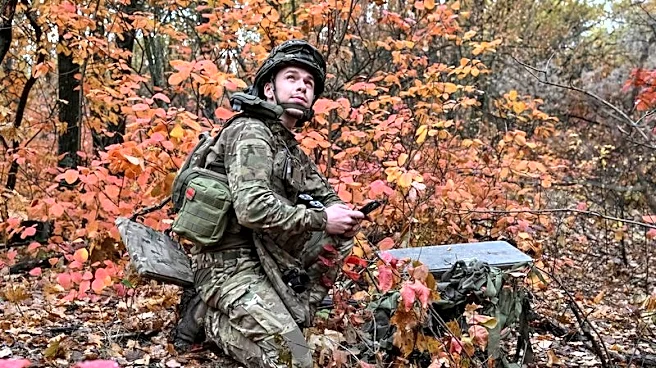
Ukrainian troops have successfully used the StarGate unmanned aerial CASEVAC (Casualty Evacuation) platform to evacuate two severely wounded soldiers from the battlefield. This occurred after ground vehicles were unable to reach their positions due to difficult
terrain, water obstacles, and intense Russian drone activity. The soldiers, Yevhen and Artem, sustained severe limb injuries in a 'gray zone' approximately five kilometers from the Russian border. Over one week, the 475th Separate Assault Regiment CODE 9.2, with support from SkyFall (the developer of StarGate), conducted two separate evacuation missions. During one mission, the StarGate drone flew nearly 30 kilometers to reach a wounded soldier and another 30 kilometers back. Despite active Russian electronic warfare attempting to suppress GPS navigation, the StarGate drone continued its flight using its onboard AI-based navigation system, successfully completing the mission.
Why It's Important?
The successful deployment of the StarGate drone for battlefield evacuations marks a significant advancement in military medical logistics and highlights the critical role of autonomous technology in modern warfare. This innovation addresses the severe challenges of evacuating wounded personnel from dangerous and inaccessible areas, potentially saving lives that would otherwise be lost due to delayed medical attention. The drone's ability to operate effectively despite GPS jamming, thanks to its AI-based navigation, demonstrates a crucial resilience against electronic warfare tactics. This capability is vital for maintaining operational effectiveness in contested environments where traditional navigation systems may be compromised. Furthermore, the regiment's plan to integrate this experience into a permanent 'air ambulance section' within its medical company signifies a strategic shift towards leveraging unmanned aerial systems for routine medical support, enhancing overall force protection and combat readiness.
What's Next?
The 475th Separate Assault Regiment CODE 9.2 plans to formalize the experience gained from these drone evacuations into a permanent capability. This includes making changes to their organizational structure to create a dedicated 'air ambulance section' within their medical company, specifically for aerial transport of wounded personnel from the battlefield. This institutionalization suggests a broader adoption of such unmanned systems for medical support in future operations. The continued development and deployment of drones like StarGate, equipped with advanced AI and redundant communication systems, will likely become a standard practice for forces operating in environments with high electronic warfare threats. This could also spur further innovation in autonomous medical and logistical support systems, potentially leading to more widespread integration of such technologies across military forces globally.
Beyond the Headlines
The use of advanced drones like StarGate for casualty evacuation points to a profound transformation in military operations, moving beyond traditional combat roles to encompass critical support functions. This development raises ethical considerations regarding the increasing automation of tasks previously performed by humans in high-risk environments. While it enhances safety for medical personnel, it also highlights the growing reliance on technology in life-or-death situations. The drone's resilience to GPS jamming underscores the ongoing technological arms race in electronic warfare, where nations are constantly developing countermeasures to maintain operational superiority. This trend could lead to a future where autonomous systems play an even more pervasive role in all aspects of military logistics, potentially reshaping the nature of battlefield support and humanitarian aid in conflict zones.