







What's Happening?
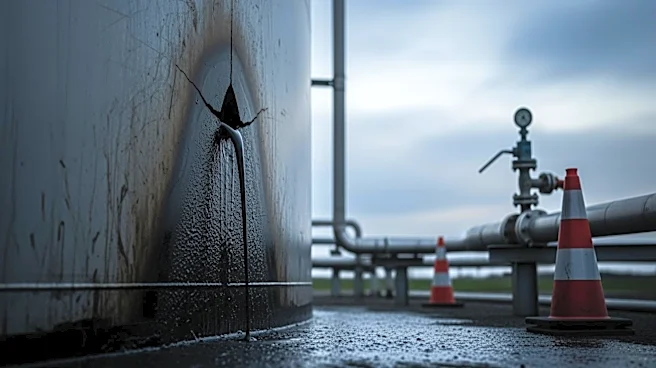
A tragic incident occurred at the Martin Asphalt facility in South Houston, Texas, where a worker was buried alive under three feet of hot tar following the rupture of a 50,000-gallon tank. Emergency responders arrived at the scene shortly after the spill,
but the worker's body was later recovered. The tar, reportedly at 210 degrees Fahrenheit, engulfed the facility, leading to the worker's death. Martin Asphalt has expressed deep regret over the incident and is conducting a comprehensive internal review while cooperating with governmental authorities. The Pasadena Fire Marshal’s Office is leading the investigation into the cause of the rupture.
Why It's Important?
This incident underscores the critical importance of safety protocols in industrial settings, particularly in facilities handling hazardous materials. The tragedy highlights potential vulnerabilities in safety measures and emergency response procedures, prompting a reevaluation of industry standards. For Martin Asphalt and similar companies, this event could lead to increased regulatory scrutiny and potential changes in operational practices to prevent future occurrences. The incident also raises concerns about worker safety and the effectiveness of existing safety regulations, which could influence policy discussions at both state and national levels.
What's Next?
As the investigation unfolds, Martin Asphalt and regulatory bodies will likely focus on identifying the root cause of the tank rupture. The findings could lead to recommendations for improved safety measures and possibly stricter regulations for facilities handling similar materials. The company may also face legal and financial repercussions, including potential lawsuits from the worker's family. Industry-wide, there may be a push for enhanced safety training and infrastructure upgrades to prevent similar incidents. Stakeholders will be monitoring the investigation's outcomes and any subsequent policy changes closely.