




What's Happening?
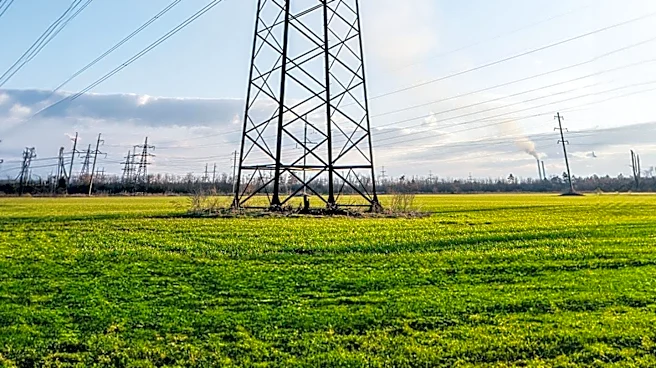
Residents and advocates in East Texas are voicing opposition to a proposal for extra-high-voltage transmission lines as part of Texas' 765-kilovolt Strategic Transmission Expansion Plan. The plan, which carries an estimated $33 billion in capital costs
and nearly $100 billion in lifetime costs, aims to support major load growth in the Permian Basin. However, opponents, including Nancy White from Canton and Molly Vogt from American Energy Works, argue that the lines would threaten over 70,000 acres of private property and disrupt agricultural land use. They contend that the Permian Basin, already rich in natural gas, does not require additional energy from other parts of the state. Concerns have also been raised about the impact on local agriculture and food supply, with calls for a pause on the project to explore alternative energy solutions.
Why It's Important?
The proposed transmission lines highlight a significant conflict between energy infrastructure development and property rights in Texas. The plan is part of broader efforts to enhance the state's energy grid, potentially lowering grid congestion costs and improving reliability. However, the opposition underscores the challenges of balancing infrastructure expansion with the rights and livelihoods of local communities. The outcome of this debate could influence future energy projects and policies, particularly in regions where land use and property rights are contentious issues. The decision could also impact the economic landscape of East Texas, affecting local agriculture and potentially altering land values.
What's Next?
As the debate continues, stakeholders, including state officials and energy companies, may need to address the concerns of local residents and landowners. This could involve revisiting the project's scope, exploring alternative routes, or implementing measures to mitigate the impact on private property and agriculture. The outcome of this situation could set a precedent for how similar infrastructure projects are approached in Texas and beyond, potentially influencing regulatory frameworks and community engagement strategies.