






What's Happening?
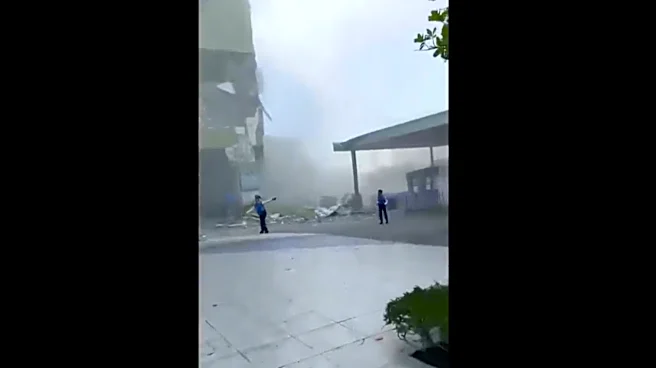
A powerful 7.8 magnitude earthquake struck off the coast of Mindanao in the southern Philippines, resulting in at least 32 fatalities and over 200 injuries. The earthquake prompted the seismological agencies of the Philippines and Indonesia to issue tsunami
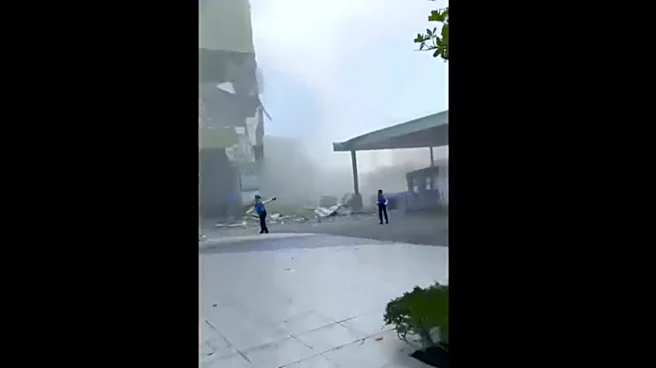
warnings, urging coastal residents to evacuate to higher ground. The alerts were later lifted, but not before 1-meter waves caused damage in at least one village. The earthquake's epicenter was located 24.7 kilometers west-southwest of the town of Burias at a depth of 35 kilometers, according to the US Geological Survey. The disaster has led to significant damage in areas like General Santos, a major port city in Mindanao, where numerous buildings have collapsed.
Why It's Important?
The earthquake highlights the vulnerability of the Philippines, which is situated on the Pacific 'Ring of Fire,' making it prone to seismic activities. The disaster underscores the need for robust disaster preparedness and response strategies in the region. The impact on General Santos, a hub for tuna exports, could have economic repercussions, affecting local and international trade. The event also raises concerns about the adequacy of current infrastructure and emergency response capabilities in dealing with such natural disasters.
What's Next?
Authorities in the Philippines are coordinating disaster response efforts to assist affected areas. The focus will likely be on rescue operations, providing medical aid to the injured, and assessing the full extent of the damage. Long-term, there may be discussions on improving infrastructure resilience and emergency preparedness to better handle future seismic events. International aid and support may also be sought to assist in recovery efforts.