




What's Happening?
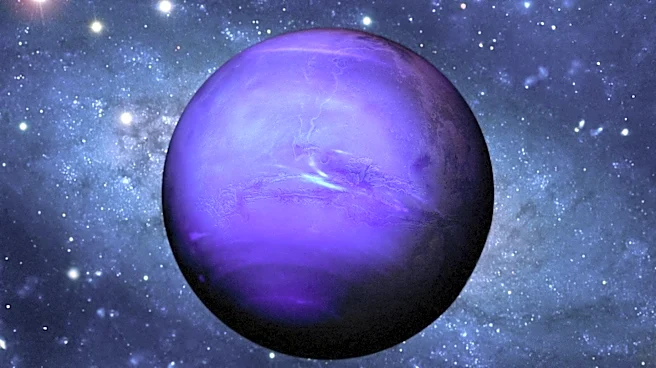
Neptune will reach opposition on September 26, 2026, at 02:00 UTC, marking the best time for observers to view the planet at its brightest, with a magnitude of +7.8. Opposition occurs when a planet is directly opposite the Sun in the sky as viewed from
Earth, making it fully illuminated and closest to our planet. While the full moon will somewhat hinder visibility on the exact date, the opposition window extends for several weeks, allowing for observation during the new moon period for better viewing conditions. To spot Neptune, a telescope with at least a 6-inch aperture is recommended, with an 8-inch or larger providing optimal views. High-powered eyepieces, such as 6mm or 9mm, or a good Barlow lens, are also suggested to boost magnification. Even with powerful equipment, Neptune will appear as a small, bluish disc without visible cloud bands or surface features due to its immense distance.
Why It's Important?
The opposition of Neptune is a significant astronomical event for both amateur and professional stargazers, providing a rare opportunity to observe one of the solar system's most distant planets under optimal conditions. For the public, it fosters an interest in astronomy and space science, encouraging engagement with educational resources and local observatories. For researchers, such events allow for continued study of Neptune's atmospheric dynamics and orbital characteristics, even if direct surface features are not discernible. The need for specialized equipment like large-aperture telescopes and high-powered eyepieces highlights the technological advancements in observational astronomy and the accessibility of such tools to a broader audience. This event also serves as a reminder of the vastness of our solar system and the ongoing efforts to understand celestial mechanics.
What's Next?
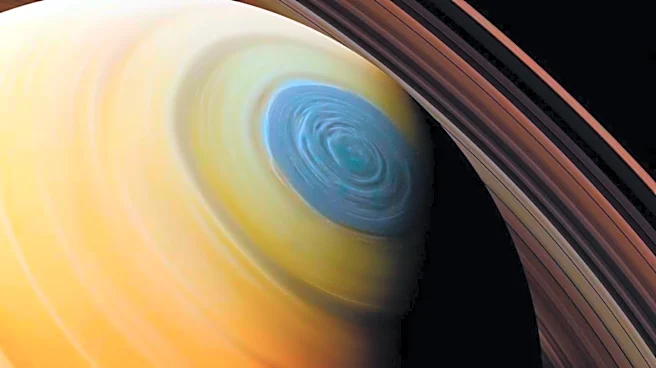
Following Neptune's opposition, stargazers can anticipate other celestial events in the fall of 2026. Saturn will reach opposition on October 4, 2026, at 12:00 UTC, shining at magnitude +0.3 and being easily visible to the naked eye, though a telescope will be needed to observe its rings and largest moons. Uranus will also reach opposition on November 25, 2026, at 23:00 UTC, requiring a larger telescope similar to Neptune for optimal viewing. Additionally, the first full supermoon of the fall/winter season, the Beaver Moon, is expected on November 24, offering a brighter-than-usual lunar display. These events provide continuous opportunities for skywatching and astrophotography throughout the autumn months, encouraging ongoing public and scientific engagement with astronomical phenomena.
Beyond the Headlines
The recurring celestial events like planetary oppositions and meteor showers underscore the cyclical nature of astronomical phenomena and their role in human culture and scientific progress. Historically, such events have driven advancements in navigation, timekeeping, and our understanding of the cosmos. In contemporary society, they continue to inspire scientific curiosity, particularly among younger generations, potentially influencing career paths in STEM fields. The accessibility of advanced amateur astronomical equipment also democratizes scientific observation, allowing individuals to participate directly in exploring the universe. Furthermore, these events offer a unique perspective on Earth's place within the solar system, fostering a sense of wonder and encouraging a broader appreciation for scientific inquiry and discovery.