









What's Happening?
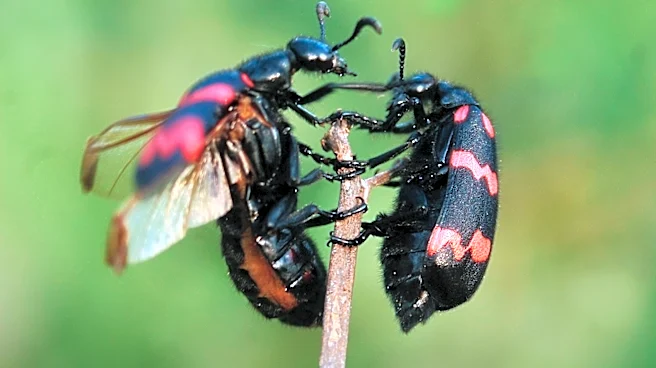
Researchers have conducted a study on the burying beetle Nicrophorus vespilloides, examining how climate change affects their mating behavior. The study found that in warmer conditions, male beetles are more likely to engage in same-sex mounting, a behavior that was
already present under normal conditions. This behavior is thought to be influenced by changes in cuticular hydrocarbons, which are affected by temperature and play a role in chemical communication. The study highlights the potential impact of climate change on the reproductive strategies of cold-blooded animals.
Why It's Important?
The findings of this study underscore the broader implications of climate change on biodiversity and animal behavior. As temperatures rise, the physiological and behavioral adaptations of species like the burying beetle may be disrupted, potentially affecting their survival and reproduction. This research contributes to our understanding of how climate change can alter ecological interactions and highlights the need for conservation efforts to mitigate these impacts. The study also raises questions about the adaptability of species to rapidly changing environments and the long-term consequences for ecosystems.