What's Happening?
Newly released data from the Centers for Disease Control and Prevention (CDC) indicates a continued decline in vaccination rates for routine vaccines among kindergartners. Specifically, measles-mumps-rubella (MMR) vaccination coverage has fallen below
the levels required for herd immunity. Concurrently, requests for vaccine exemptions have increased, with 4.2% of kindergartners receiving them, up from 3.6% in the previous year. Public health officials, such as Dr. Marvia Jones, director of the Kansas City Health Department, express concern over this trend, noting that the country is not moving in the right direction regarding childhood immunizations. This decline is occurring as children return to classrooms, a period typically associated with a surge in respiratory illnesses like flu, COVID-19, and RSV. Medical groups and public health experts are actively working to counter misinformation, particularly that amplified by political figures, which they believe is contributing to the decreasing vaccination rates among school-aged children.
Why It's Important?
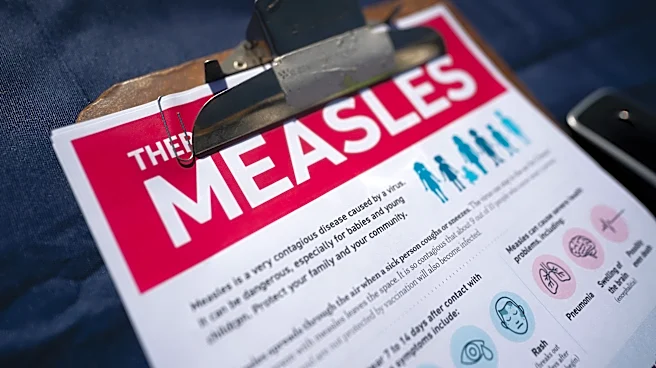
The decline in kindergarten vaccination rates carries significant public health implications for the U.S. A reduction in MMR vaccination coverage below herd immunity thresholds increases the risk of outbreaks of preventable diseases like measles. The U.S. has already seen a substantial rise in confirmed measles cases, reaching over 3,100 this year, marking a 35-year high. This erosion of community immunity not only endangers unvaccinated individuals but also those who cannot be vaccinated due to age or medical conditions. The spread of misinformation, particularly from high-profile sources, undermines public trust in established medical science and complicates efforts by local health departments to protect communities. This situation can lead to increased strain on healthcare systems, disruptions in schooling due to illness and quarantine, and economic burdens on working families who may face lost wages or childcare challenges.
What's Next?
Public health officials and medical experts anticipate continued efforts to combat vaccine misinformation and encourage higher vaccination rates. Local health departments are expected to maintain and expand initiatives like community vaccine clinics and educational campaigns to reach parents. The American Academy of Pediatrics (AAP) and other medical groups will likely continue to advocate for recommended childhood vaccines and challenge any policies or statements that undermine vaccine safety and efficacy. The ongoing respiratory virus season will serve as a critical test, as reduced vaccination rates could lead to more severe outbreaks of flu, COVID-19, and RSV among children. Stakeholders will closely monitor disease incidence and vaccination uptake to assess the effectiveness of current public health strategies and potentially adapt them to address evolving challenges.
Beyond the Headlines
The current trend of declining vaccination rates highlights a deeper societal challenge concerning trust in scientific institutions and the impact of misinformation. The politicization of public health issues, particularly vaccines, has created a complex environment where evidence-based recommendations are often met with skepticism. This situation underscores the need for robust public health communication strategies that can effectively counter false narratives and rebuild community trust. Furthermore, the issue touches upon the ethical responsibility of individuals to contribute to herd immunity, thereby protecting vulnerable populations. The long-term implications could include a resurgence of diseases previously considered controlled, potentially altering the landscape of childhood health and requiring significant re-investment in public health infrastructure and education.