






What's Happening?
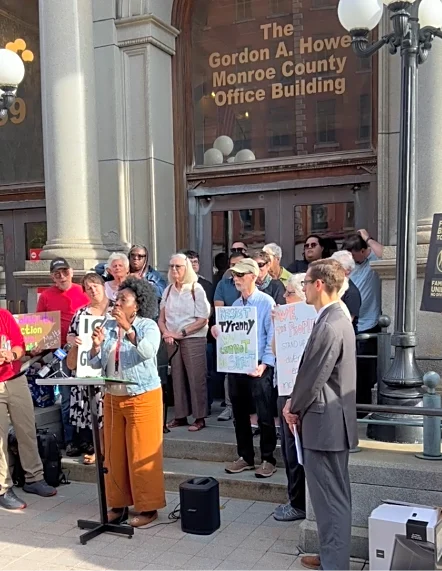
Two prominent environmental organizations, the League of Conservation Voters (LCV) and NRDC Action Fund, have initiated new field programs in seven competitive U.S. House districts. These efforts involve paid canvassing to engage voters and are notable
because they leverage a 2024 Federal Election Commission (FEC) advisory that permits outside groups to coordinate with political campaigns on face-to-face voter interactions. This marks a significant shift from previous regulations that typically mandated strict firewalls between such groups and campaigns. The NRDC Action Fund is supporting Democratic candidates JoAnna Mendoza (Arizona's 6th District), Rebecca Cooke (Wisconsin's 3rd), William Lawrence (Michigan's 7th), and Janelle Stelson (Pennsylvania's 10th). The LCV's program aims to bolster Florida Rep. Kathy Castor (14th District) and Democratic candidates Rebecca Bennett (New Jersey's 7th) and Paige Cognetti (Pennsylvania's 8th). Five of these seven races are currently rated as 'Toss-ups' by Inside Elections with Nathan L. Gonzales, indicating their highly competitive nature.
Why It's Important?
This coordinated canvassing effort is important because it represents a new strategy for environmental advocacy groups to directly influence U.S. electoral outcomes, particularly in closely contested House races. The FEC advisory allowing coordination on canvassing activities provides these organizations with an unprecedented opportunity to amplify their impact on the ground. By connecting environmental issues, such as energy costs, directly to voters' daily lives and offering solutions through specific candidates, these groups aim to sway public opinion and voter behavior. This approach could prove crucial in districts where the margin of victory is expected to be narrow. The ability to coordinate more closely with campaigns allows for more targeted and effective outreach, potentially increasing voter turnout for favored candidates and shifting the balance of power in the House. This development also highlights the evolving landscape of campaign finance and the increasing sophistication of outside groups in engaging with the electorate.
What's Next?
The environmental groups plan to continue their canvassing efforts, with the League of Conservation Voters aiming to knock on over 150,000 doors across its three targeted districts and spending a combined $1.5 million. The NRDC Action Fund intends to knock on approximately 20,000 doors in each of its districts and will also conduct campus voter registration in Michigan's 7th and Arizona's 2nd districts, along with relational organizing in Pennsylvania's 7th, 8th, and 10th districts. The effectiveness of these coordinated efforts will be closely watched as a potential model for future election cycles, especially given the competitive nature of the targeted races. The outcomes in these districts will likely inform future strategies for both environmental groups and political campaigns regarding the utilization of FEC advisories for direct voter engagement. Other advocacy groups may also adopt similar coordinated canvassing models if these initial efforts prove successful in influencing election results.
Beyond the Headlines
The FEC advisory enabling this coordination could have broader implications for the role of outside groups in U.S. elections. By allowing direct collaboration on canvassing, the advisory blurs the traditional lines between independent expenditures and coordinated campaign activities, potentially leading to increased influence of special interest groups in electoral processes. This shift could raise questions about campaign finance transparency and the integrity of elections, as the ability of well-funded organizations to directly assist campaigns in voter outreach expands. Furthermore, the focus on connecting environmental issues to voters' daily concerns, such as energy bills, reflects a strategic evolution in how environmental advocacy is framed, moving beyond abstract concerns to tangible economic impacts. This approach could set a precedent for how other issue-based groups engage with voters in future elections, emphasizing practical consequences over ideological arguments.