




What's Happening?
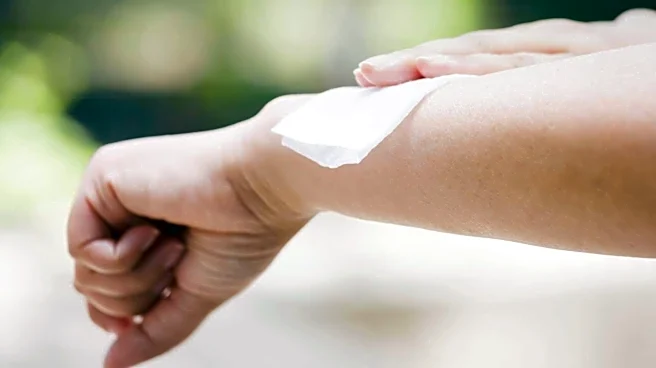
Researchers at Imperial College London have developed a novel bioinspired dressing that accelerates wound healing by harnessing the body's own healing proteins. This innovative material captures and releases healing signals precisely where and when they
are needed, based on the physical force exerted by repair cells. The dressing has shown promising results in laboratory tests, including faster wound closure in mouse models and improved repair of human skin tissue. This approach could potentially reduce the reliance on costly manufactured drugs by utilizing repair molecules harvested directly from a patient's own wounds or blood. The research, published in Nature Materials, marks a significant step towards clinical application, demonstrating the mechanism's effectiveness in living tissue across various biological settings.
Why It's Important?
The development of this bioinspired dressing represents a major breakthrough in wound care, particularly for chronic wounds that are difficult to heal. By leveraging the body's natural healing processes, this technology could significantly reduce healthcare costs associated with wound management. It offers a more efficient and targeted delivery of healing signals, potentially improving outcomes for patients with diabetic foot ulcers, burns, and traumatic injuries. The ability to use the body's own repair molecules also means that this approach could be more accessible in low-resource settings, where advanced therapies are often unavailable. This innovation could transform wound care by making it more effective and affordable, benefiting both patients and healthcare systems.
What's Next?
The research team is working towards bringing this technology into clinical use through a spinout company, Traxion Biotech. They are in discussions with partners and healthcare professionals to explore potential applications in emergency medicine, humanitarian settings, and frontline care. The next steps involve further testing and validation in clinical trials to ensure safety and efficacy in human patients. If successful, this bioinspired dressing could become a standard treatment option for various types of wounds, offering a more sustainable and cost-effective solution for wound management.
Beyond the Headlines
This development highlights the potential of bioinspired materials in medical applications, showcasing how nature's mechanisms can be harnessed to solve complex healthcare challenges. The approach of using the body's own forces to activate healing signals could inspire similar innovations in other areas of medicine, such as tissue engineering and regenerative therapies. Additionally, this technology raises important ethical considerations regarding the use of biological materials and the potential for personalized medicine, where treatments are tailored to an individual's unique biological makeup.