







What's Happening?
A five-year investigation by The Outlaw Ocean Project, a journalistic nonprofit led by former New York Times reporter Ian Urbina, has revealed concerning practices behind the farmed fish consumed in the United States. The probe, involving over 70 reporters,
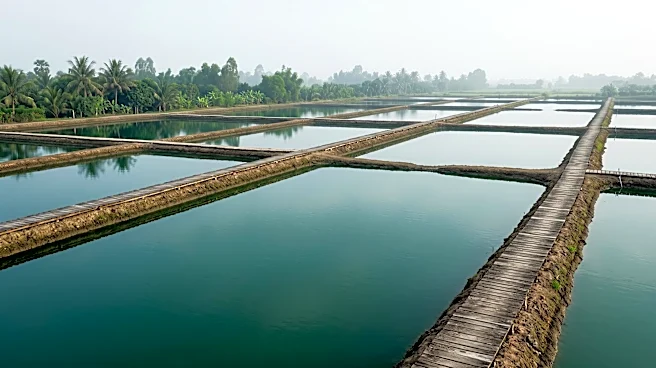
found that seafood can be linked to 'forced labor, rancid waste, [and] harmful chemicals.' The investigation highlights that while aquaculture (fish farming) has grown to supply over half of the seafood consumed globally, these farmed fish are largely fed with smaller wild fish. This practice means a significant portion—a fifth—of all fish pulled from the oceans is used for fishmeal and fish oil, not direct human consumption. Popular U.S. seafood like salmon and shrimp are predominantly imported from farms that rely on this fishmeal, ending up in supermarkets and restaurants across the country, including those on Capitol Hill.
Why It's Important?
This investigation is crucial because it exposes the hidden environmental and ethical costs associated with the seafood supply chain, directly impacting U.S. consumers and the broader food industry. The reliance on wild-caught fish for aquaculture feed puts immense pressure on ocean ecosystems, potentially leading to overfishing of forage species vital for marine food webs. Furthermore, the alleged links to forced labor and harmful chemicals raise significant ethical concerns for consumers and demand greater transparency and accountability from seafood producers and distributors. For the U.S. market, which heavily imports farmed seafood, these findings could prompt increased scrutiny from regulators, consumer advocacy groups, and potentially lead to changes in sourcing practices by retailers and restaurants. It also highlights a global issue where advanced economies may be externalizing environmental and social costs onto developing countries.
What's Next?
The Outlaw Ocean Project has launched a 'Bait to Plate' tool, which Urbina hopes other reporters will use to trace seafood from its origins to consumers, detailing potential crimes or concerns within supply chains. This tool aims to increase transparency and accountability within the seafood industry. Consumers may also see increased calls for more responsible seafood purchasing, with guides already being published on how to buy and eat seafood responsibly. Governments of advanced economies, including the U.S., may face pressure to address how their consumption patterns impact global seafood practices and to implement stricter import regulations or support initiatives for more sustainable and ethical aquaculture. The investigation could also spur further journalistic efforts and public awareness campaigns, potentially leading to shifts in consumer demand and industry standards.
Beyond the Headlines
The investigation delves into the complex global economics of food production, revealing how the demand for affordable seafood in developed nations can drive unsustainable and unethical practices in developing countries. The 'dirty secret' points to a systemic issue where the true cost of food—environmental degradation, human rights abuses, and chemical contamination—is not reflected in market prices. This raises profound ethical questions about consumer responsibility and corporate accountability in a globalized food system. The reliance on fishmeal also highlights a broader ecological dilemma: using wild-caught fish to feed farmed fish creates a net loss of biomass and energy in the food chain, challenging the very notion of aquaculture as a sustainable solution to overfishing. This could trigger a re-evaluation of aquaculture practices and a push towards alternative, more sustainable feed sources.