
What's Happening?
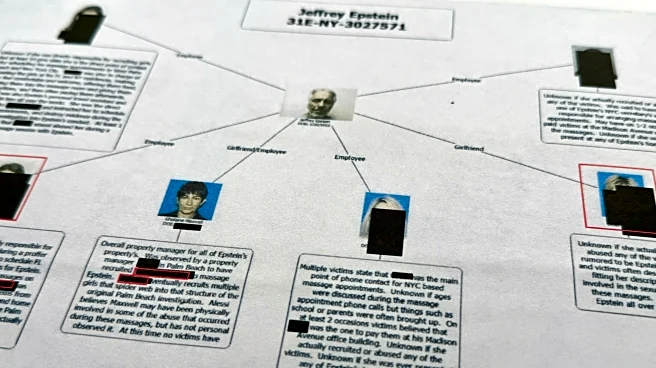
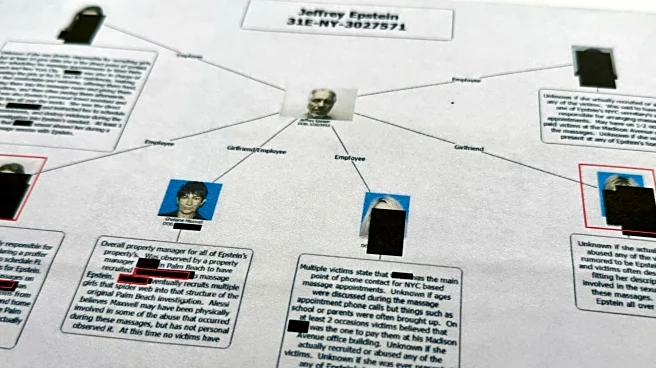
The U.S. Department of Justice (DOJ) is under pressure to expedite the review and release of documents related to Jeffrey Epstein's case, as mandated by the Epstein Files Transparency Act. The DOJ has
been criticized for the slow pace and extensive redactions in the documents, which include over 5.2 million pages. Tysen Duva, head of the DOJ's criminal division, has urged lawyers to increase their review speed to at least 1,000 pages per day. As of last week, approximately 209,000 pages have been reviewed. Congress members Ro Khanna and Thomas Massie have expressed concerns about the DOJ's compliance with transparency laws and have requested a federal judge to appoint a special master to oversee the process. The judge, Paul Engelmayer, has yet to decide on this request, and the DOJ is expected to respond in court by Friday.
Why It's Important?
The handling of the Epstein files is significant due to the high-profile nature of the case and the public's demand for transparency. The DOJ's ability to manage and disclose these documents impacts public trust in the justice system, particularly in cases involving influential figures. The concerns raised by Congress members highlight potential issues with transparency and accountability within the DOJ, which could have broader implications for how sensitive information is handled in future cases. The outcome of this process may influence legislative actions regarding transparency and oversight of federal agencies.
What's Next?
The DOJ is expected to respond to the court regarding the request for a special master by Friday. Depending on the court's decision, there could be increased oversight of the DOJ's document review process. If a special master is appointed, it may lead to a more transparent and expedited release of the Epstein files. Additionally, the DOJ's handling of this case could prompt further legislative scrutiny and potential reforms aimed at improving transparency and accountability in federal investigations.