






What's Happening?
A recent report by the Bank of Baroda highlights a significant reduction in India's import dependence across several key sectors, despite ongoing global supply chain disruptions. The report, released on Saturday, indicates that sectors such as electricals,
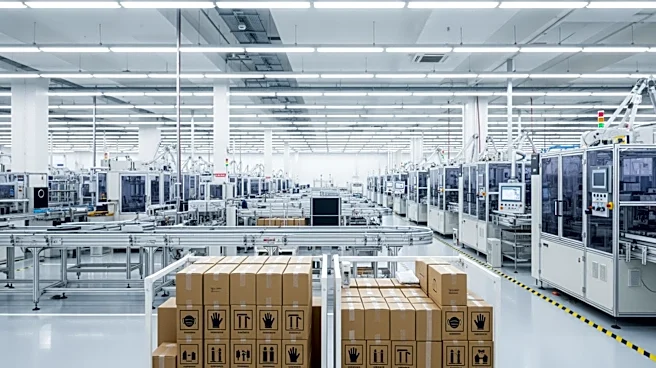
chemicals, capital goods, and consumer durables have shown a marked decrease in import reliance. This shift is attributed to India's strategic efforts to bolster domestic manufacturing capabilities through initiatives like Make in India and the India Semiconductor Mission 2.0. The study analyzed 1,372 non-financial companies, revealing that the overall import-to-net-sales ratio for India stood at 22.3% in FY25, down from 22.9% in FY19. Notably, the electricals sector saw a sharp decline in its import-to-net-sales ratio from 22.7% in FY19 to 13.7% in FY25. Similar trends were observed in the chemicals sector, where the ratio fell from 27.5% to 22.5% over the same period.
Why It's Important?
The reduction in import dependence is crucial for India's economic resilience, particularly in the face of global supply chain challenges exacerbated by geopolitical tensions in West Asia. By decreasing reliance on imported inputs, India can better shield its economy from external commodity shocks and price volatility. This strategic shift not only supports domestic industries but also aligns with broader policy goals to enhance self-reliance and strengthen local manufacturing ecosystems. The report underscores the importance of targeted policy measures in achieving these outcomes, suggesting that continued focus on sector-specific strategies could further mitigate risks associated with global supply disruptions.
What's Next?
As India continues to navigate global economic uncertainties, the focus will likely remain on expanding domestic manufacturing capabilities and reducing import dependence in other critical sectors. Policymakers may prioritize further development of initiatives like the Electronics Components Manufacturing Scheme and the establishment of Chemical Parks to support this transition. Additionally, close monitoring of sectors that remain highly import-dependent, such as industrial gases and fuels, will be essential to manage potential risks from global commodity market volatility.