

What's Happening?
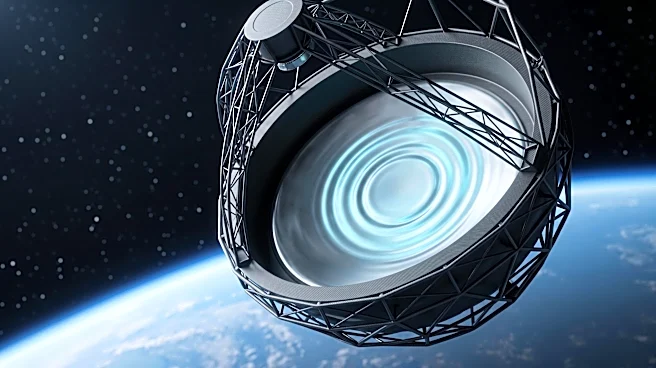
NASA is progressing with its contributions to the Laser Interferometer Space Antenna (LISA) mission, an international space observatory designed to detect gravitational waves. L3Harris Technologies has been tasked with designing, assembling, and integrating
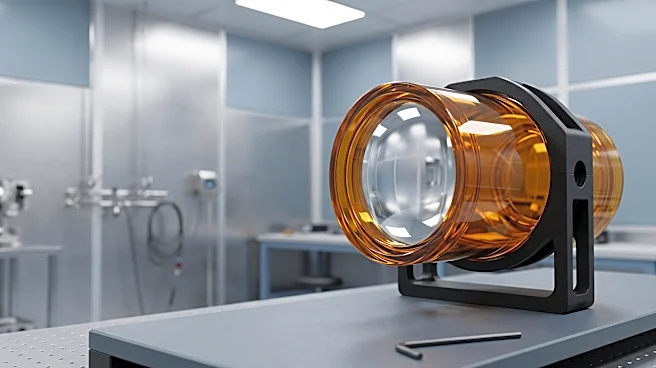
a new all-glass Engineering Test Unit telescope for NASA. This unit represents a crucial step towards the production of flight hardware for the mission, which is led by the European Space Agency (ESA) and slated for launch in the mid-2030s. NASA's role includes providing these specialized telescopes, other critical hardware, and extensive engineering and scientific support. The LISA mission will deploy three satellites in an Earth-following orbit, forming a triangular array with sides stretching 1.6 million miles. Each satellite will house two telescopes that use infrared laser beams to precisely measure minute changes in their relative distances, which are indicative of passing gravitational waves. These changes are incredibly small, less than the width of a helium atom, but are essential for detecting low-frequency gravitational waves that ground-based observatories cannot. The telescopes will be constructed entirely from Zerodur, an amber-colored ceramic-glass composite known for its stability across varying temperatures.
Why It's Important?
The advancement of the LISA mission is significant for astrophysics and our understanding of the universe. By detecting low-frequency gravitational waves, LISA will open a new window into cosmic phenomena that are currently unobservable. This includes the mergers of supermassive black holes billions of light-years away, mapping compact binary systems like white dwarfs, neutron stars, and stellar-mass black holes within our own galaxy, and potentially offering new insights into the fundamental nature of gravity itself. The mission builds upon Albert Einstein's 1916 general theory of relativity, which predicted gravitational waves, and the first ground-based detections in 2015. LISA's space-based platform will overcome limitations of Earth-based detectors, which are sensitive to higher-frequency waves. The successful development and deployment of these highly precise telescopes are critical for the mission's ability to measure the minuscule distortions in space-time caused by these waves, thereby expanding humanity's observational capabilities in cosmology and fundamental physics.
What's Next?
Following the delivery of the Engineering Test Unit telescope, NASA will continue rigorous testing to ensure its performance meets the stringent requirements for space operation. This unit is considered the last pre-flight unit before the production of the actual flight hardware. The insights gained from testing this unit will be incorporated into the final design and manufacturing processes. The next major milestone will be the delivery of the first optical telescope to ESA. Concurrently, NASA will continue its contributions to other critical hardware, such as the laser system and devices for managing electric charge on the proof masses, as well as providing ongoing scientific and engineering expertise. As the mid-2030s launch window approaches, further integration and testing of all mission components will be necessary to prepare the trio of satellites for their deployment into orbit. The mission's success hinges on the precise coordination and functionality of these advanced technologies.
Beyond the Headlines
The LISA mission represents a profound leap in gravitational-wave astronomy, moving beyond the current capabilities of ground-based observatories. Its ability to detect low-frequency gravitational waves will allow scientists to probe the universe's most massive and energetic events, offering a unique perspective on the evolution of galaxies and the dynamics of supermassive black holes. This could lead to breakthroughs in understanding the early universe, the formation of cosmic structures, and even the nature of dark matter and dark energy, if these phenomena produce detectable gravitational wave signatures. Furthermore, the mission's technological demands, particularly in precision laser interferometry and ultra-stable optics, push the boundaries of engineering and materials science. The collaborative international nature of LISA also highlights the growing trend of global scientific partnerships in tackling complex and ambitious space exploration endeavors, fostering shared knowledge and resources for the advancement of human understanding.