


What's Happening?
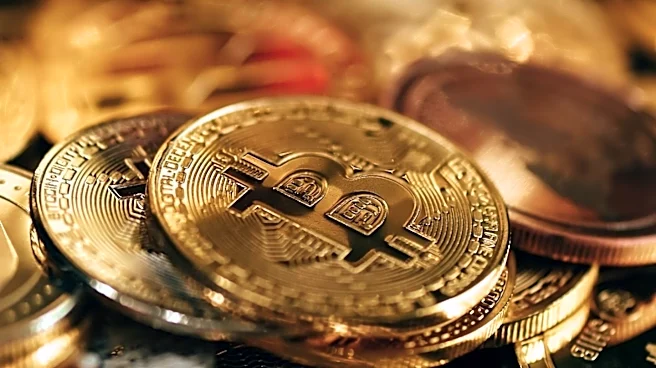
Russian President Vladimir Putin has signed a new law that regulates cryptocurrency exchanges, allowing both retail and qualified investors to purchase cryptocurrencies through certified financial intermediaries. The law, which will take effect on September
1, 2026, sets out rules for crypto exchanges, digital depositories, brokers, asset managers, organized trading platforms, and clearing providers. However, it maintains a ban on using cryptocurrency as a payment method within Russia. Non-qualified investors will be limited to purchasing only approved crypto-assets, with an annual cap of 300,000 rubles per intermediary. Qualified investors, on the other hand, can trade larger amounts after passing a suitability test. The law also requires market operators to comply with licensing and capital requirements, with crypto-exchange providers needing to register and hold a minimum equity capital of 15 million rubles.
Why It's Important?
This development is significant as it marks Russia's first comprehensive legal framework for cryptocurrency, potentially influencing global crypto markets. By regulating exchanges and setting purchase limits, the law aims to protect investors while fostering a controlled environment for crypto trading. The restrictions on using cryptocurrency as a payment method reflect ongoing concerns about financial stability and regulatory oversight. For U.S. stakeholders, this move could impact international crypto trading dynamics and influence regulatory approaches in other countries. The law's emphasis on compliance and capital requirements may also set a precedent for how other nations approach crypto regulation.
What's Next?
The implementation of this law will likely lead to increased scrutiny and adjustments within the Russian crypto market. Market operators and investors will need to adapt to the new regulations, which could involve significant changes in trading practices and compliance measures. The Bank of Russia is expected to draft additional rules on organized trading, pricing, custody, and oversight, which will further shape the market landscape. Internationally, other countries may observe Russia's approach as a potential model for their own regulatory frameworks, potentially leading to a more standardized global approach to cryptocurrency regulation.