





What's Happening?
The Defense Advanced Research Projects Agency (DARPA), in collaboration with industry partners, is preparing to launch a robotic satellite servicing mission in the summer of 2026. This mission, known as the Robotic Servicing of Geosynchronous Satellites
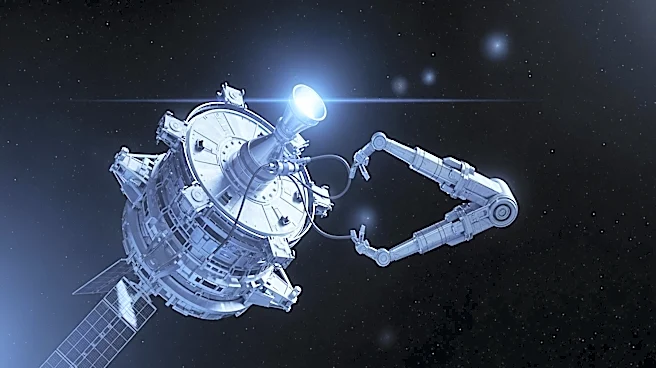
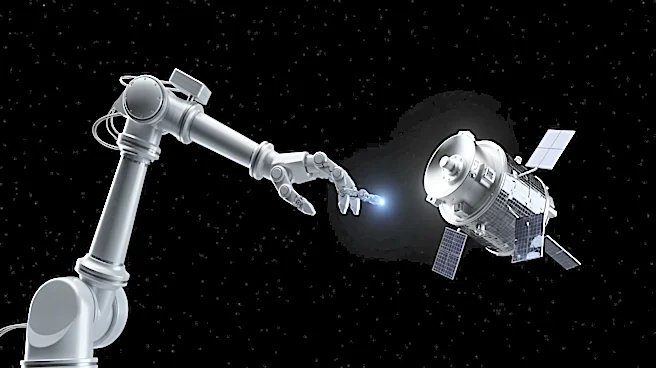
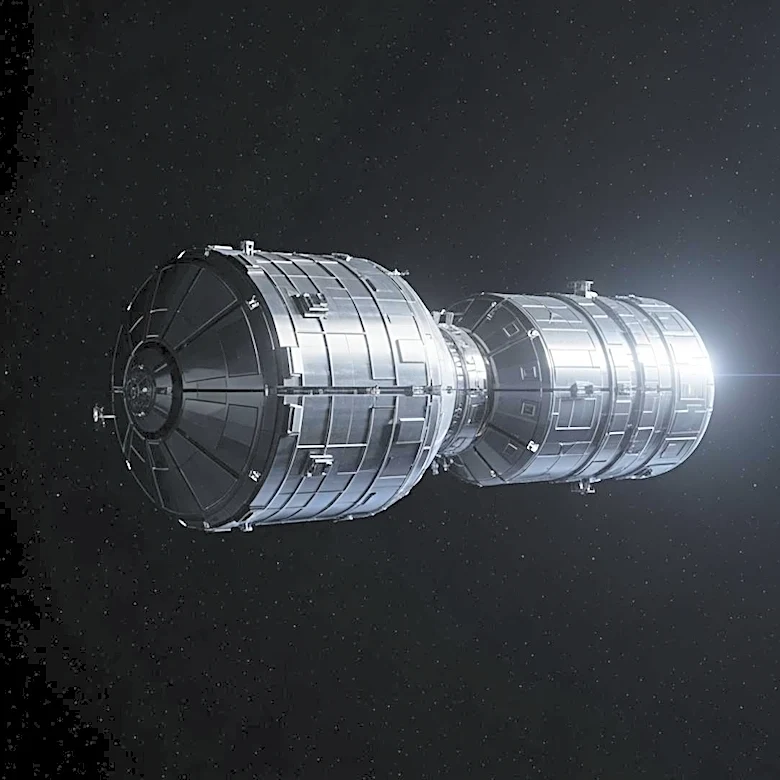
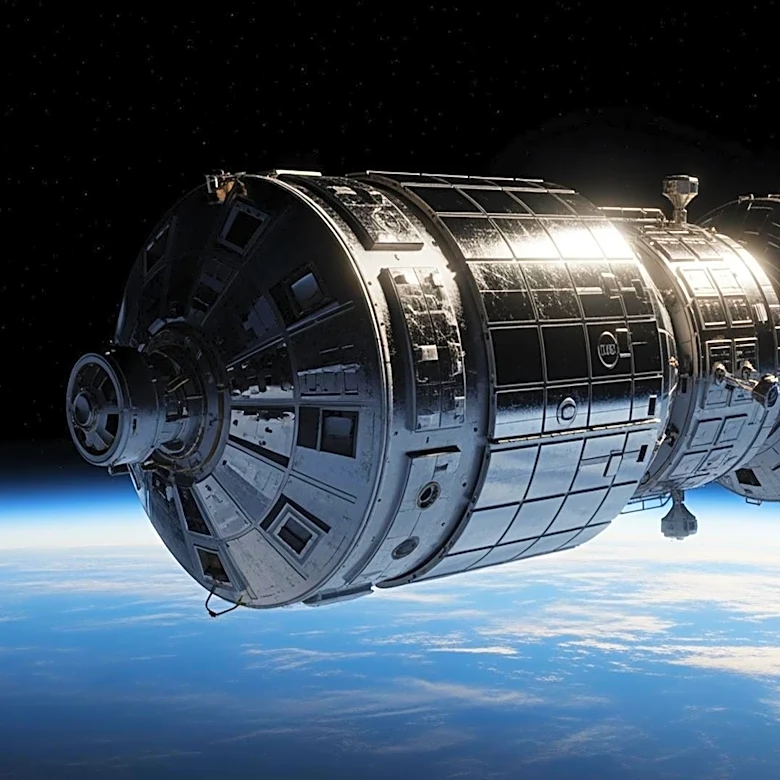
(RSGS), aims to demonstrate the capabilities of on-orbit maintenance and upgrades for satellites operating in geosynchronous orbit. The centerpiece of this mission is the Mission Robotic Vehicle (MRV), a spacecraft equipped with a sophisticated robotic servicing system. This system is designed to perform various tasks such as satellite inspections, repairs, relocations, upgrades, and anomaly resolutions while in orbit. The program targets geosynchronous orbit, where numerous commercial, military, and government satellites operate approximately 36,000 kilometers above Earth. DARPA is leading the development of these robotic servicing technologies in partnership with the Naval Research Laboratory and NASA, while SpaceLogistics, a subsidiary of Northrop Grumman, is responsible for system integration.
Why It's Important?
The RSGS mission represents a significant step towards commercializing robotic satellite servicing technologies. By proving the commercial viability of on-orbit servicing, the program aims to transform the satellite industry from treating spacecraft as disposable assets to maintaining them as sustainable resources. This shift could enhance the resilience and sustainability of space infrastructure, reduce costs associated with replacing satellites, and extend the operational life of existing space assets. The mission also highlights the growing interest in autonomous robotic systems capable of operating in complex orbital environments with minimal human intervention. If successful, the RSGS mission could pave the way for a commercial market in robotic servicing missions and future in-space assembly, manufacturing, and infrastructure maintenance programs.
What's Next?
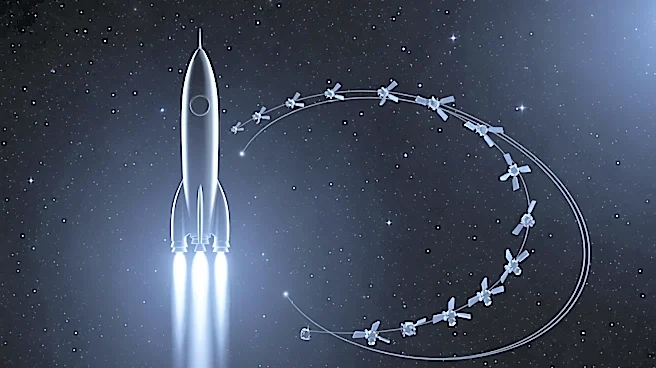
The RSGS mission is set to launch in the summer of 2026, with ongoing preparations and collaborations between DARPA, the Naval Research Laboratory, NASA, and SpaceLogistics. As the launch date approaches, these organizations will continue to refine the technologies and systems necessary for the mission's success. The outcome of this mission could influence future policies and investments in space infrastructure and autonomous robotic systems. Stakeholders in the aerospace industry, including commercial satellite operators and government agencies, will be closely monitoring the mission's progress and results to assess the potential for broader adoption of robotic servicing technologies.