







What's Happening?
Construction is set to begin on the fourth Church of Jesus Christ of Latter-day Saints temple in Colorado, located in northeast Colorado Springs. The 18.6-acre site at Flying Horse Club Drive and Barossa Valley Road has been prepared for a groundbreaking
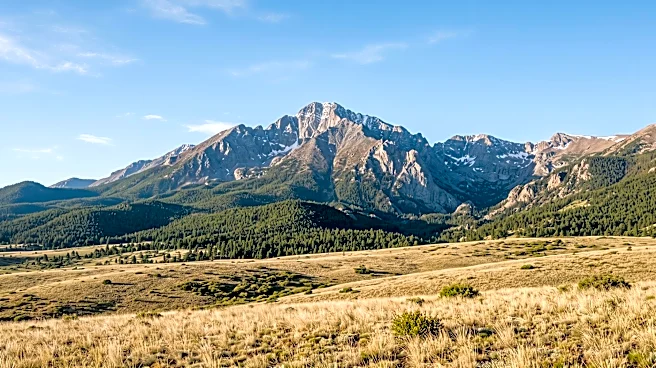
ceremony scheduled for September 12. Colorado Springs Mayor Yemi Mobolade and Colorado Congressman Jeff Crank are expected to attend the event, alongside religious leaders, political figures, education officials, business representatives, military personnel, and local congregants. The project, which includes a 33,000-square-foot temple, a separate meeting house, and a maintenance building, is anticipated to take three to four years to complete. The temple's design will feature natural granite aggregate and artistic glass, inspired by Pikes Peak. This development follows the church's announcement in 2023 to build a new temple in Colorado Springs, a plan that faced initial appeals regarding the height of its 140-foot spire and illumination plans, which were ultimately resolved with community input.
Why It's Important?
The construction of a new temple for the Church of Jesus Christ of Latter-day Saints signifies the growing presence and influence of the faith community in Colorado, particularly in the Colorado Springs area. With approximately 150,000 Latter-day Saints statewide and 22,400 members served by this new temple, the project reflects the church's regional and global growth, with worldwide membership exceeding 17.5 million in 2024. The temple will serve as a significant spiritual center for its members, offering a place for sacred ceremonies and covenants. While entry into the temple for service will be reserved for members living in harmony with the church's laws, a public open house will be held upon completion, providing a unique opportunity for the wider community to experience the interior. This initiative also highlights the intersection of religious expansion with local urban development, as the temple's construction coincides with the ongoing Powers Boulevard Extension Project, a major infrastructure undertaking aimed at improving mobility and connectivity in northeast Colorado Springs.
What's Next?
Following the groundbreaking ceremony on September 12, construction on the Colorado Springs temple will commence immediately, with an estimated completion time of three to four years. During this period, church officials plan to provide weekly updates to the community and offer tours of the construction site at various stages. Once the temple is completed, a public open house will be held, allowing non-members to tour the interior before its dedication for temple service. Concurrently, the Powers Boulevard Extension Project will continue, aiming to enhance the region's transportation infrastructure. The long-term impact will include a new spiritual landmark for the Latter-day Saint community and improved connectivity for residents of northeast Colorado Springs and surrounding areas, potentially fostering further community engagement and development.
Beyond the Headlines
The development of the new temple in Colorado Springs extends beyond its immediate religious and construction implications, touching upon themes of community integration, religious freedom, and urban planning. The initial challenges faced during the approval process, particularly concerning the spire's height and illumination, underscore the delicate balance between religious expression and community aesthetics and regulations. The resolution of these issues through dialogue and concessions demonstrates a pathway for diverse community interests to coexist. Furthermore, the temple's location adjacent to a major infrastructure project, the Powers Boulevard Extension, illustrates how large-scale religious and civic developments can converge, potentially influencing local demographics, traffic patterns, and economic activity. The emphasis on public tours before dedication also reflects an effort by the Church of Jesus Christ of Latter-day Saints to foster understanding and transparency with the broader community, inviting engagement with a structure that will become a prominent feature of the Colorado Springs landscape.