


What's Happening?
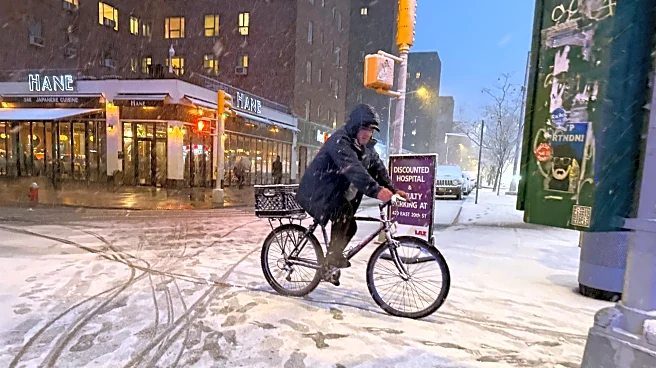
A significant nor’easter is set to intensify off the Mid-Atlantic coast, affecting approximately 30 million people with blizzard warnings from coastal Virginia to southern New Hampshire. The storm is expected to bring over a foot of snow from Delaware
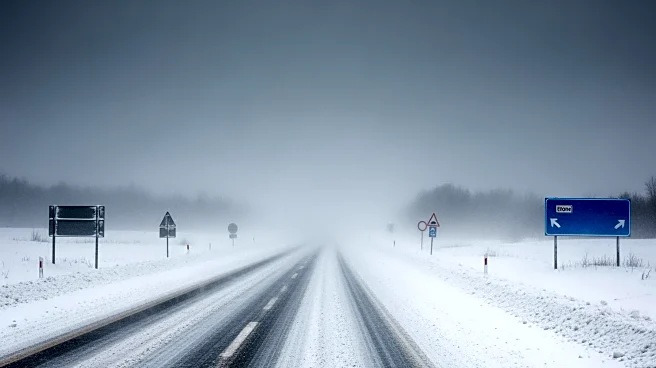
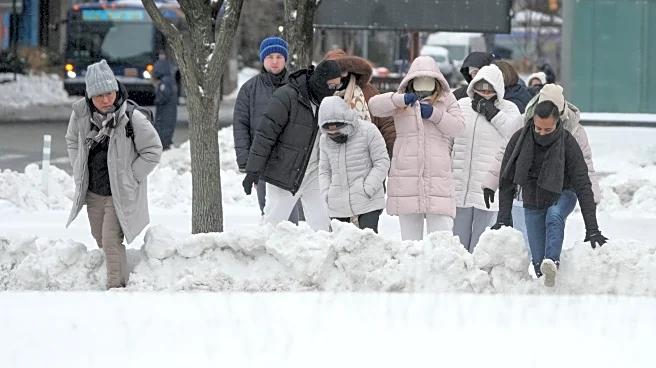
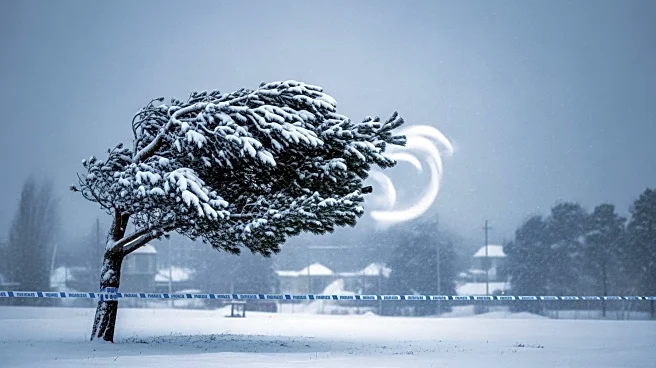
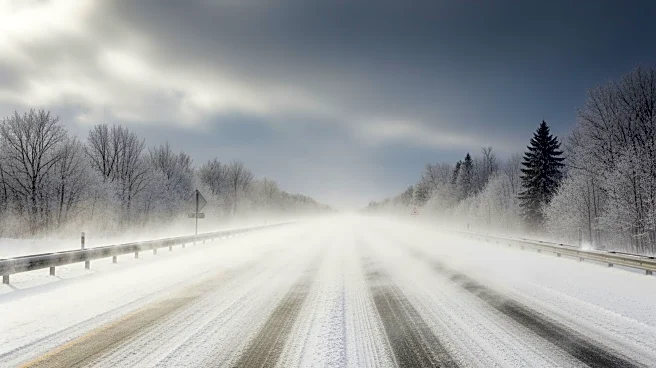
to southeast Massachusetts, with the hardest-hit areas in southern New England potentially receiving up to 2 feet of snow. States of emergency have been declared in New York and New Jersey. The storm, which will become a bomb cyclone by early Monday, will cause travel conditions to deteriorate rapidly, with whiteout conditions expected due to heavy snow and strong winds. The National Weather Service has advised against non-emergency travel and recommended having a winter survival kit for those who must travel.
Why It's Important?
The impending blizzard poses significant challenges for transportation and infrastructure in the affected regions. With heavy snowfall and strong winds, there is a high risk of power outages due to downed power lines and tree limbs. The storm's impact on major cities like New York, Philadelphia, and Boston could lead to widespread disruptions, including school closures and delays in public services. Additionally, the storm is expected to cause moderate to major coastal flooding, which could result in structural damage and road closures in coastal communities. The economic impact could be substantial, affecting businesses and daily activities across the region.
What's Next?
As the storm progresses, emergency services and local governments will be monitoring conditions closely. The response will likely include snow removal operations and efforts to restore power where outages occur. Residents in the affected areas are advised to stay informed through local news and weather updates. The storm is expected to move out of northern New England by Tuesday morning, but residual effects such as blowing snow and coastal flooding may persist. Authorities will continue to assess the situation and provide guidance on recovery efforts and any further necessary precautions.