



What's Happening?
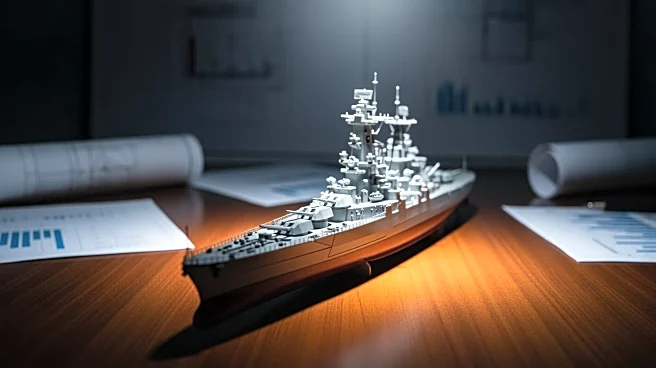
President Trump announced a plan to build a new class of battleships, termed 'Trump Class' vessels, during a presentation at Mar-a-Lago. The proposal includes constructing two initial ships, with the potential for up to 25 in total. These ships are intended
to be the largest ever built by the U.S. Navy. However, the plan has been met with skepticism due to the high costs, estimated between $9 billion and $14 billion per ship, and the obsolescence of battleships in modern warfare. Critics argue that the program contradicts current Navy strategies that favor distributed firepower over concentrated battleship fleets. The timeline for the project suggests that the first ship would not be deployable until the 2030s, raising doubts about its viability under future administrations.
Why It's Important?
The proposed battleship program has significant implications for U.S. defense spending and military strategy. The high cost of the ships could strain the Pentagon's budget, potentially diverting funds from other critical defense needs. Additionally, the focus on large battleships may not align with modern naval warfare tactics, which emphasize flexibility and adaptability to new threats. The program's feasibility is further questioned by historical precedents of similar projects facing cost overruns and cancellations. If pursued, the program could impact defense contractors and shipbuilding industries, but it also risks being a financial burden without delivering strategic benefits.
What's Next?
The future of the Trump Class battleship program is uncertain, as it may face cancellation by subsequent administrations before any ships are completed. The program's success depends on securing political and financial support, which could be challenging given its high costs and strategic misalignment. Stakeholders, including defense contractors and military strategists, will likely continue to debate the program's merits and potential adjustments to align with evolving military needs. The outcome will influence future defense procurement policies and the direction of U.S. naval capabilities.
Beyond the Headlines
The proposal to build new battleships reflects broader themes in defense policy, such as the tension between traditional military power symbols and the need for innovation in response to modern threats. The program's emphasis on size and power may appeal to certain political narratives but could overlook the complexities of contemporary warfare. The decision to pursue or abandon the program will signal how the U.S. prioritizes technological advancement and strategic flexibility in its military planning.