

What's Happening?
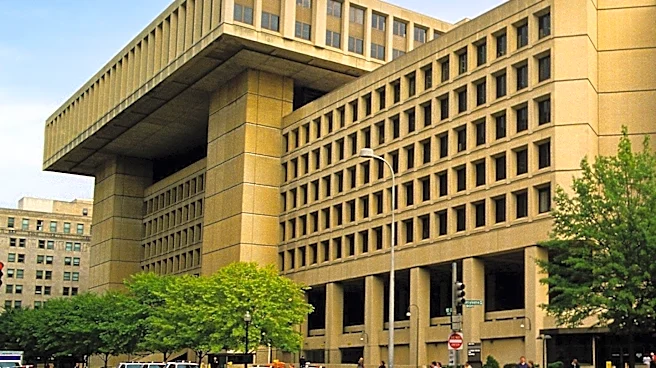
Human Rights Watch has released a 112-page report detailing a significant reduction in federal civil rights enforcement across various U.S. government agencies. The report highlights a drastic decrease in staff at the Department of Housing and Urban Development's
(HUD) Office of Fair Housing, which saw its personnel drop from 31 to 11. This reduction led to at least 115 fair housing complaints being closed or halted without investigation, despite legal mandates requiring HUD to pursue them. Furthermore, the fair housing hotline reportedly became inoperative, and the Fair Housing Initiatives Program (FHIP), a crucial funding source for local fair housing organizations, experienced a $30 million cut. The report also notes similar trends in other departments, such as the Department of Justice's Disability Rights Section losing most of its attorneys, and the Department of Education concluding 2025 without a single resolution agreement concerning the seclusion and restraint of disabled students. Human Rights Watch characterizes these actions not as a shift in enforcement priorities but as an intentional abandonment of civil rights protections.
Why It's Important?
The documented dismantling of federal civil rights enforcement has profound implications for vulnerable populations in the U.S., particularly disabled individuals, and those who are Black, Brown, poor, or otherwise multiply marginalized. The reduction in staff and funding at agencies like HUD and the DOJ's Disability Rights Section directly impacts the ability of these groups to seek redress for discrimination and human rights violations. The report suggests that this systemic weakening of enforcement mechanisms could exacerbate existing inequalities and create an environment where civil rights abuses are less likely to be investigated or remedied. The decreased capacity of federal agencies to address fair housing complaints, disability rights issues, and educational disparities means that individuals facing discrimination may have fewer avenues for justice, potentially leading to increased social and economic hardship for affected communities. This trend also signals a broader shift in governmental priorities, potentially undermining the foundational principles of equality and justice in the U.S.
What's Next?
The Human Rights Watch report calls for increased support for legal services and fair housing organizations that are currently shouldering the burden of civil rights enforcement. It also implicitly urges a demand for adequate funding for these organizations to continue their work. The findings may prompt advocacy groups and civil rights organizations to intensify their efforts to pressure the U.S. government to restore and strengthen federal civil rights enforcement mechanisms. There could be calls for congressional oversight, legislative action to mandate minimum staffing and funding levels for these agencies, and public campaigns to raise awareness about the impact of these policy changes. Legal challenges against the government for failing to uphold its statutory obligations in civil rights enforcement are also a potential next step. The report's findings could also influence future electoral debates, with civil rights advocates pushing for candidates who commit to robust federal enforcement of anti-discrimination laws.
Beyond the Headlines
The deliberate weakening of federal civil rights enforcement, as highlighted by Human Rights Watch, points to deeper ethical and societal implications. It suggests a potential shift towards a less interventionist government role in protecting marginalized communities, which could lead to a normalization of discrimination and inequality. The report's assertion that these actions are intentional and disproportionately affect certain groups raises concerns about systemic racism, ableism, and class-based oppression being perpetuated through policy. This trend could erode public trust in government institutions designed to safeguard fundamental rights and may foster a climate where civil rights are perceived as less important. The reliance on AI-generated materials in official media narratives, as mentioned in a related context, also raises questions about the potential for technology to be used to control information and obscure realities, further complicating efforts to hold authorities accountable for human rights issues. The long-term consequence could be a society with diminished protections for its most vulnerable members, leading to increased social fragmentation and injustice.