




What's Happening?
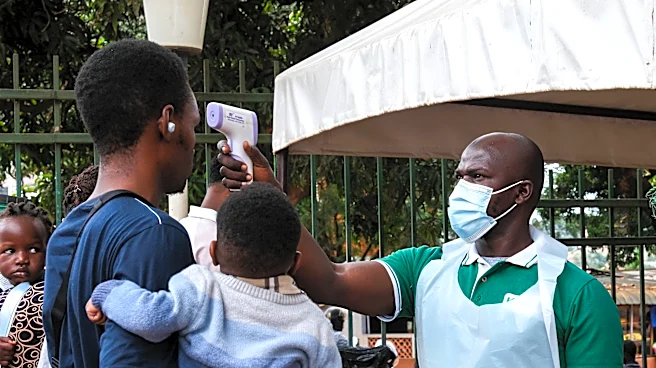
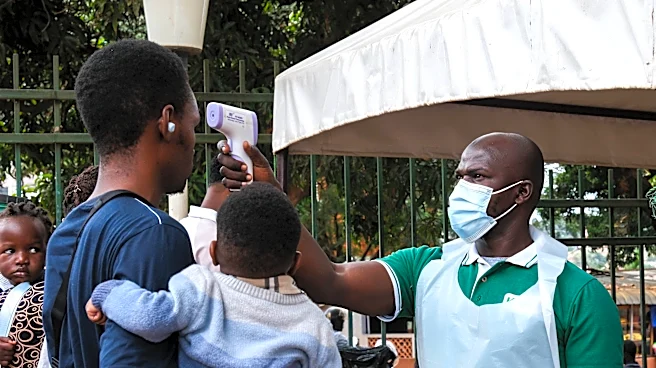
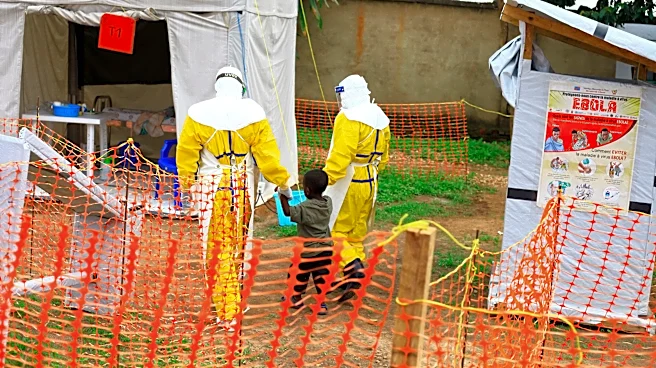
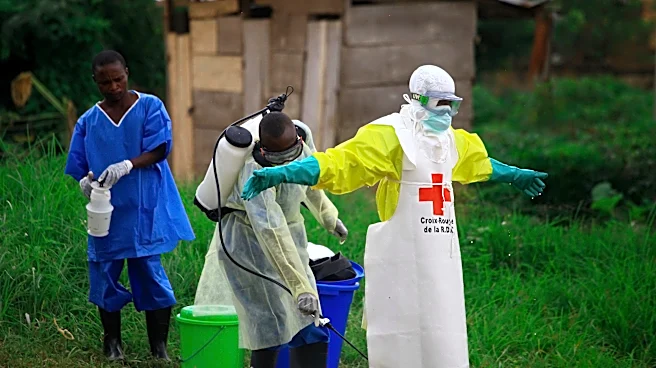
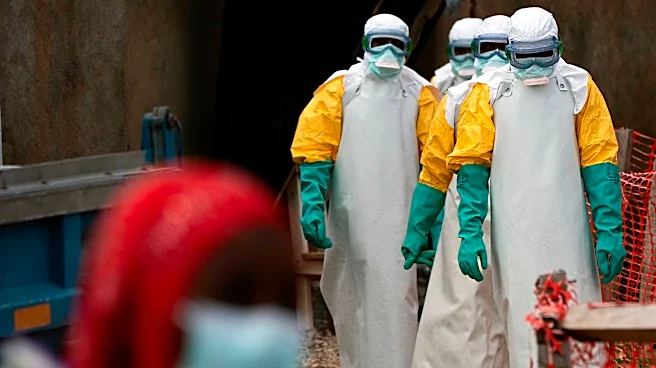
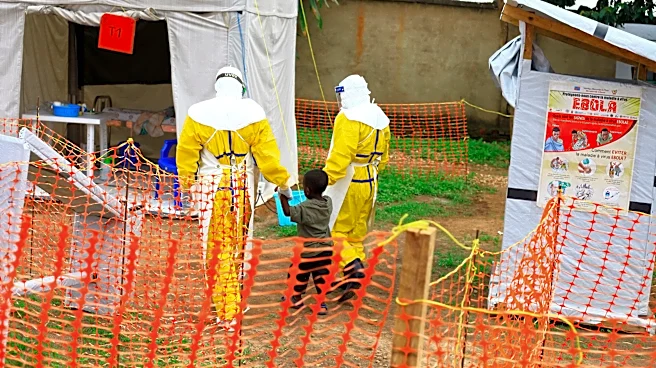
The World Health Organization (WHO) has declared a 'public health emergency of international concern' due to a new strain of Ebola, known as Bundibugyo Ebolavirus, spreading rapidly through central Africa. The outbreak has been reported in the Democratic
Republic of Congo and Uganda, with significant uncertainties regarding the number of infected individuals and the geographic spread. The WHO is responding by airlifting supplies to affected areas, including infection prevention materials and laboratory equipment. The outbreak has resulted in at least 80 suspected deaths and nearly 250 suspected cases. The Bundibugyo strain, first identified in Uganda in 2007, has no approved vaccines or treatments, unlike the more common Zaire strain.
Why It's Important?
The declaration of a global health emergency highlights the potential for the outbreak to escalate, posing a significant threat to public health. The lack of vaccines or treatments for the Bundibugyo strain increases the risk of widespread transmission, particularly in densely populated areas. The situation underscores the need for international cooperation and rapid response to contain the virus. The outbreak could have severe implications for the affected regions, disrupting healthcare systems and economies. The WHO's intervention aims to prevent further spread and protect vulnerable populations.
What's Next?
The WHO is mobilizing resources and expertise to support the ongoing response in the Democratic Republic of Congo and Uganda. Efforts will focus on halting the spread of the virus and protecting lives. The international community may need to provide additional support to ensure a comprehensive response. Monitoring and surveillance will be crucial to track the outbreak's progression and implement effective containment measures. The situation may prompt discussions on improving global preparedness for emerging infectious diseases.