







What's Happening?
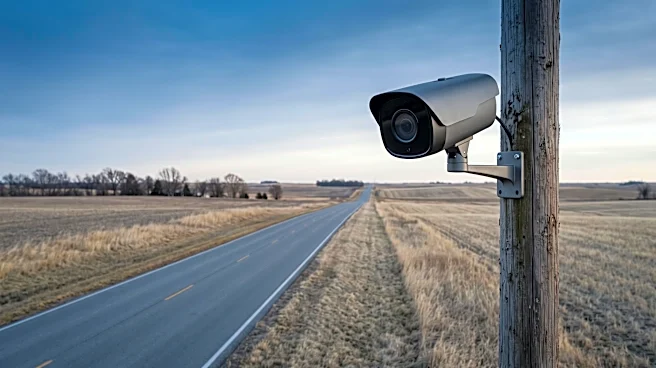
After the Ord City Council in Nebraska unanimously voted to remove two AI-powered Flock surveillance cameras, the Valley County Board of Supervisors decided to keep seven other Flock cameras operational outside Ord's city limits. This decision has sparked
significant controversy among residents, who expressed concerns about privacy and lack of public input. Residents at a county meeting voiced strong opposition, stating they did not consent to the cameras' installation and do not want them in their county. The Valley County sheriff supports keeping the cameras. Data from these cameras has been accessed over 450,000 times in one month by various police departments and federal agencies, with hundreds of searches related to immigration offenses. The ACLU of Nebraska has criticized the widespread use of Flock cameras, warning that they are contributing to the creation of a nationwide mass surveillance system.
Why It's Important?
This situation highlights a growing tension between local government entities, public privacy concerns, and the expansion of surveillance technology in the United States. The county's decision to override local sentiment raises questions about democratic accountability and the extent of public control over data collection. The extensive access to license plate data by numerous agencies, including for immigration offenses, underscores the broad implications for civil liberties and potential for misuse. Critics argue that while law enforcement cites crime-solving benefits, these systems create comprehensive records of innocent citizens' movements, raising significant privacy concerns. The difficulty in removing established surveillance systems, even when opposed by voters, sets a precedent for how communities can challenge or resist such technologies.
What's Next?
The ongoing disagreement between Valley County officials and residents suggests continued public debate and potential activism regarding surveillance technology. Residents may explore further avenues to challenge the county's decision, possibly through local advocacy groups or legal action. The ACLU of Nebraska is likely to continue its efforts to raise awareness and advocate against the proliferation of Flock cameras and similar surveillance systems. This local dispute could also influence other communities facing similar decisions about surveillance technology, potentially leading to more organized resistance or policy changes at the state or local level regarding the implementation and oversight of such systems.
Beyond the Headlines
The conflict in Valley County reflects a broader national struggle over the balance between public safety and individual privacy in the digital age. The deployment of AI-powered license plate readers represents a significant shift towards pervasive surveillance, where the movements of all citizens, not just suspects, are routinely tracked and recorded. This raises profound ethical questions about data ownership, government overreach, and the potential for a 'chilling effect' on civil liberties. The ease with which data is shared among various law enforcement and federal agencies also points to a lack of transparency and accountability in how this information is used, potentially leading to discriminatory practices or the erosion of trust between communities and law enforcement. The incident underscores the need for robust public discourse and clear regulatory frameworks to govern the use of advanced surveillance technologies.