






What's Happening?
Catherine Breed, a 33-year-old marathon swimmer from Mill Valley, is undertaking an unprecedented 900-mile swim along the entire California coastline, from Oregon to Mexico. On Day 89 of her journey, while swimming a 10-mile leg, she and her support crew
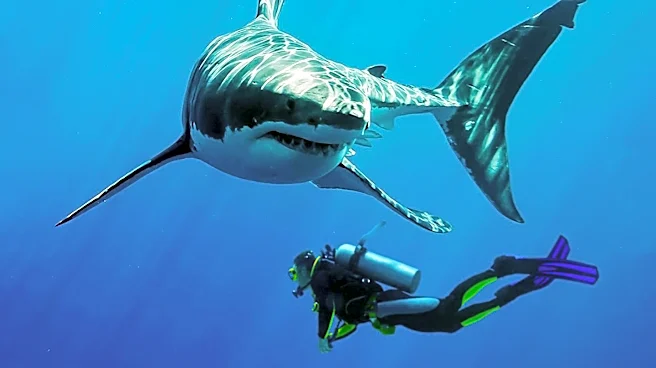
encountered a great white shark. Shark documentarian Carlos Gauna, known as The Malibu Artist, was documenting Breed's swim and captured drone footage of the shark. The crew spotted three different great whites within 20 minutes, with one juvenile shark circling their support boat. Breed's expedition involves swimming approximately 10 miles daily, facing challenges such as cold water, currents, wind, fog, jellyfish, and remote coastlines. Her team provides continuous support, including navigation, position documentation, and carbohydrate drinks or endurance gels every 30 minutes, without her touching the support vessel. The journey is meticulously documented with GPS coordinates and photographic evidence to ensure its eventual ratification as a record-breaking attempt.
Why It's Important?
This event highlights the intersection of extreme athletic endeavors and marine wildlife conservation. Breed's ambitious swim not only pushes the boundaries of human endurance but also serves as a platform to promote ocean conservation and inspire women and girls to pursue challenging goals. The encounter with great white sharks underscores the rich biodiversity of California's coastal waters and the importance of understanding and coexisting with marine predators. For the scientific community, the documentation by Carlos Gauna provides valuable real-time footage of shark behavior in proximity to human activity, contributing to ongoing research on marine ecosystems. The public's engagement with such a high-profile event can increase awareness about ocean health, the challenges faced by marine life, and the need for protective measures. Furthermore, the meticulous planning and execution of Breed's swim, including the support team and documentation, set a precedent for future long-distance open-water challenges.
What's Next?
Catherine Breed will continue her 900-mile swim along the California coastline, aiming to reach Mexico. Her journey will likely continue to be documented, potentially leading to further insights into marine life encounters and the physical and mental demands of such an undertaking. The footage captured by Carlos Gauna may be used in future documentaries or educational materials to raise awareness about great white sharks and ocean conservation. As Breed progresses, public interest in her record-breaking attempt and her conservation message is expected to grow. The successful completion of her swim would not only be a personal achievement but also a significant milestone in open-water swimming history, potentially inspiring others to undertake similar challenges and advocate for environmental causes. The data collected during her swim, including observations of marine life, could also contribute to broader ecological studies.
Beyond the Headlines
The narrative of Catherine Breed's swim extends beyond a mere athletic feat, touching upon themes of human resilience, environmental stewardship, and the evolving relationship between humans and the natural world. Her decision to undertake such a challenging journey to promote ocean conservation reflects a growing trend of individuals using their platforms to advocate for environmental causes. The encounter with great white sharks, often perceived as fearsome creatures, also offers an opportunity to reframe public perception, emphasizing their role as vital components of marine ecosystems rather than just threats. This event could spark broader discussions about marine protected areas, responsible tourism, and the impact of human activities on coastal environments. The meticulous documentation of her journey, including the shark encounter, contributes to a collective understanding of marine life and the importance of preserving these natural habitats for future generations. It also highlights the ethical considerations involved in human interaction with wildlife during such expeditions.