





What's Happening?
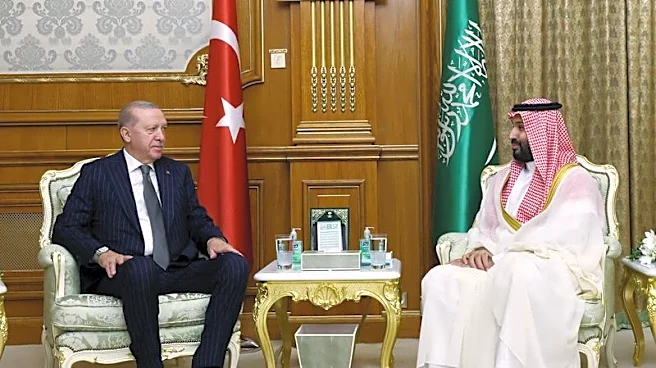
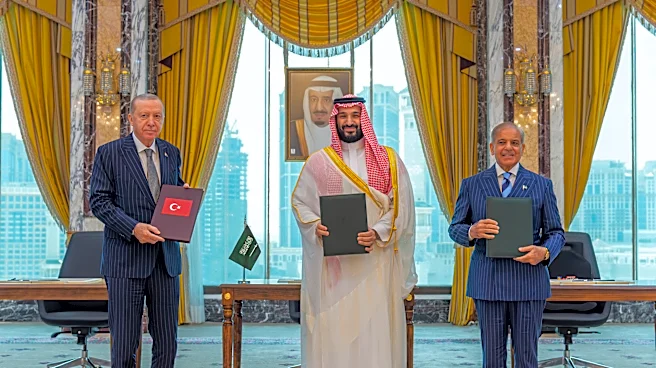
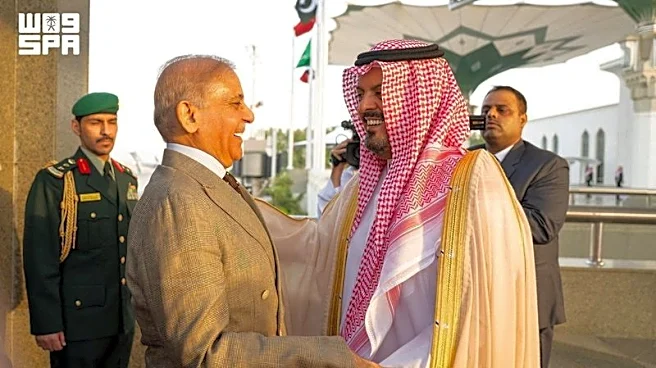
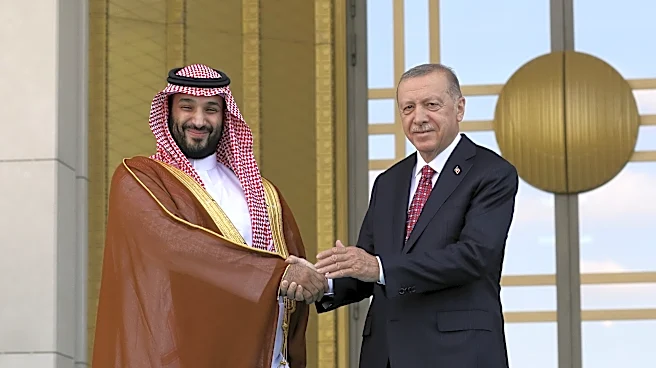
Saudi Arabia has entered into a significant defense agreement with Turkey and Pakistan, known as the Mecca Joint Defense Agreement. This pact, signed in Mecca, establishes a collective defense alliance among the three nations, stipulating that an attack
on any one of them will be considered an attack on all. The agreement aims to bolster Saudi Arabia's security beyond its traditional reliance on the United States, amidst growing regional uncertainties. Turkey, possessing NATO's second-largest military, and Pakistan, the only nuclear-armed Muslim nation, are seen as formidable allies in strengthening Saudi deterrence. The pact is not intended to form a sectarian or religious military axis, nor does it include a nuclear-sharing mechanism. It seeks to enhance defense cooperation, including rapid force integration and operational synchronization during crises.
Why It's Important?
The Mecca Joint Defense Agreement marks a strategic shift for Saudi Arabia, as it seeks to diversify its security partnerships beyond the United States. This move reflects regional doubts about the reliability of U.S. protection for its Gulf allies. By aligning with Turkey and Pakistan, Saudi Arabia aims to present a united front against potential threats, particularly from Iran. The agreement could potentially draw Turkey and Pakistan into conflicts they have previously avoided, thereby altering the regional power dynamics. This development could have significant implications for U.S. foreign policy in the Middle East, as it may affect the traditional security architecture and alliances in the region.
What's Next?
The agreement serves as a warning to Iran, indicating that further aggression could trigger a broader conflict involving Turkey and Pakistan. The pact may also pave the way for other regional countries to join, similar to NATO's expansion model. This could lead to a reconfiguration of alliances in the Middle East, with potential impacts on regional stability and security. The response from Iran has been critical, with officials warning that the agreement will not guarantee Saudi Arabia's security. The evolving situation will require careful monitoring, as it could influence future diplomatic and military engagements in the region.