

What's Happening?
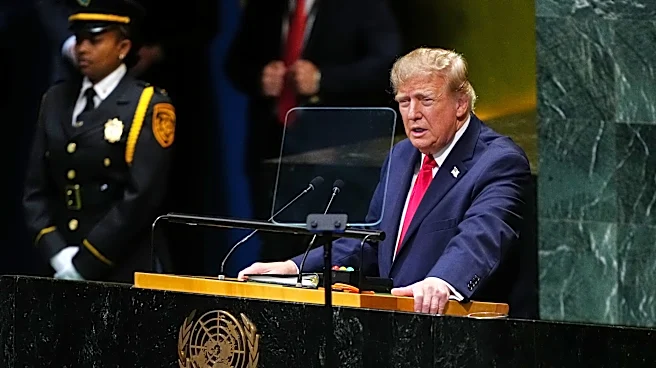
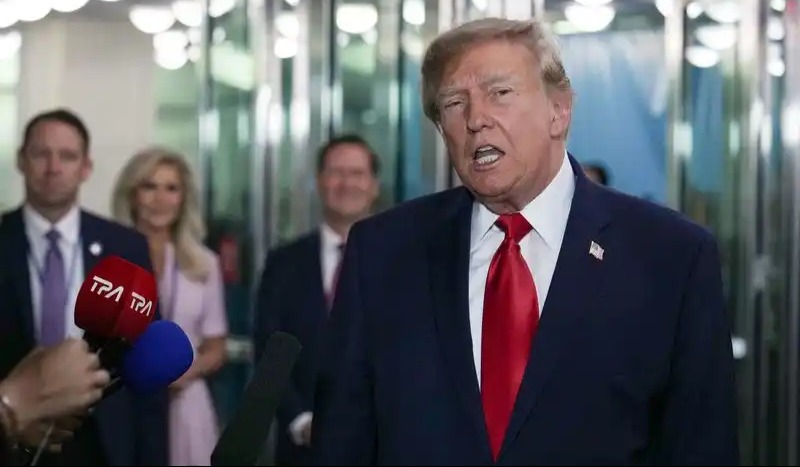
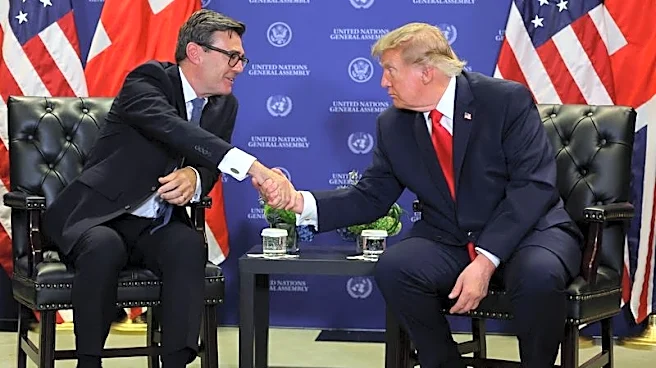
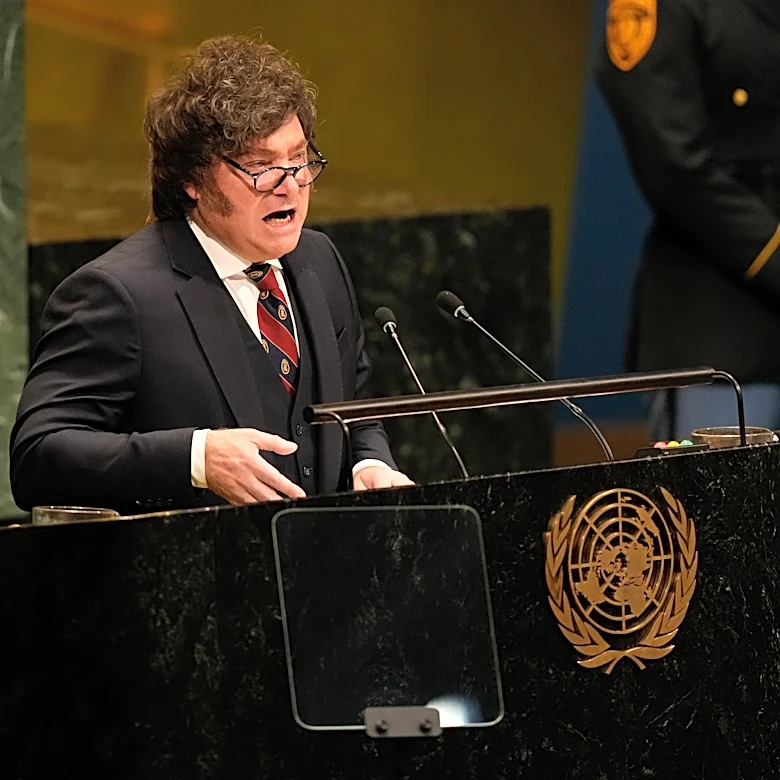
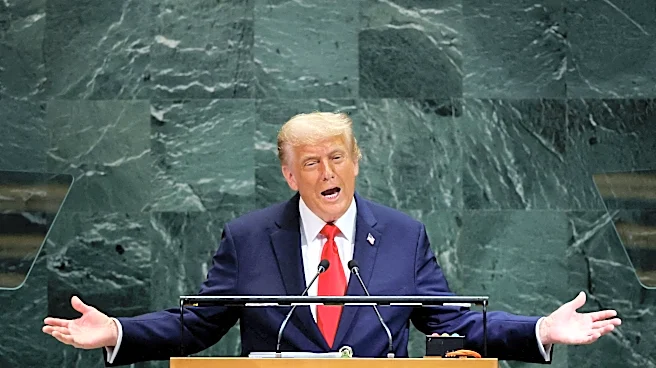
President Trump delivered a speech at the 81st United Nations General Assembly, asserting the return of American strength and a commitment to decisive action on international issues. His address focused on a tough stance against Iran's nuclear program
and its role as a state sponsor of terrorism, highlighting the 25th anniversary of the September 11 attacks and the third anniversary of the October 7 attack in Israel. President Trump also addressed security in the Western Hemisphere, vowing to prevent threats from gaining a foothold and stating that the U.S. would use its military power if necessary. He criticized the Cuban regime for coordinating with communist networks in the U.S. and declared that communism would not come to America. Furthermore, President Trump equated drug cartels to ISIS, designating them as foreign terrorist organizations and authorizing the use of U.S. Armed Forces against them. He also rejected the concept of a world government and global taxes, and criticized UN human rights bodies for focusing on the U.S. while ignoring atrocities elsewhere. The President also touched upon artificial intelligence, stating that the U.S. would reject any attempt to establish a centralized, globalist control system over it.
Why It's Important?
President Trump's address at the UN General Assembly signals a continued emphasis on national sovereignty and a proactive, unilateral approach to U.S. foreign policy. His strong rhetoric against Iran, drug cartels, and communism underscores a commitment to protecting American interests and projecting power globally. The designation of drug cartels as foreign terrorist organizations and the authorization of military force against them could significantly escalate U.S. involvement in combating these groups, potentially leading to increased cross-border operations and heightened tensions with countries like Mexico. The rejection of a world government and global taxes reinforces a nationalist stance, which could impact international cooperation on various global challenges, including climate change and economic policy. His criticism of UN human rights bodies and the rejection of global AI control systems indicate a potential shift away from multilateral governance in these areas, prioritizing national control and decision-making. This approach could reshape alliances and international agreements, influencing global stability and the U.S.'s role within international institutions.
What's Next?
Following President Trump's address, the U.S. is likely to continue pursuing a firm stance against Iran, potentially leading to further sanctions or increased military presence in the Middle East. The emphasis on combating drug cartels could result in more aggressive U.S. operations, potentially involving military action, and increased pressure on Mexico to address these groups. This may lead to diplomatic friction and challenges in bilateral relations. The U.S. will likely continue to advocate for national sovereignty in international forums, potentially resisting efforts to establish global governance mechanisms, particularly concerning artificial intelligence and taxation. Other nations and international organizations may react to President Trump's assertions with varying degrees of support or opposition, potentially leading to new diplomatic alignments or increased isolation for the U.S. The ongoing debate over the role of the UN and the future of global cooperation will likely intensify, with the U.S. continuing to champion its 'America First' agenda.
Beyond the Headlines
President Trump's speech reflects a broader ideological current emphasizing national self-interest and a skepticism towards global institutions. The equating of drug cartels with ISIS elevates the threat perception of these criminal organizations to a level typically reserved for state-sponsored terrorism, potentially justifying more extreme measures and blurring the lines between law enforcement and military action. This could have profound legal and ethical implications regarding human rights and international law. The rejection of global AI control systems highlights a growing concern among major powers about technological sovereignty and the strategic importance of artificial intelligence. This stance could lead to a fragmented global regulatory landscape for AI, with different nations developing their own standards and potentially creating barriers to international collaboration on AI safety and ethics. Furthermore, the strong defense of national sovereignty and the criticism of international bodies could signal a long-term shift in global governance, where multilateralism is increasingly challenged by nationalistic agendas, impacting global problem-solving on issues requiring collective action.