
What's Happening?
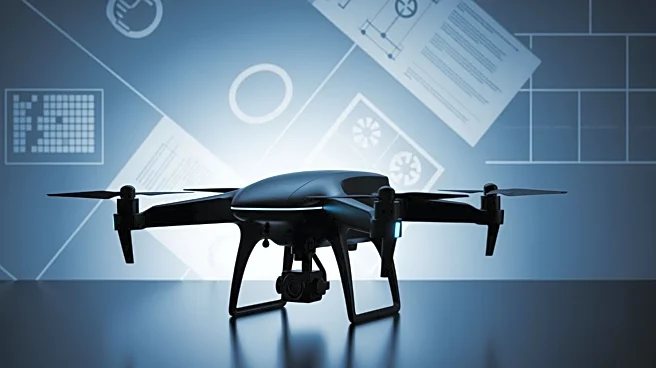
China has expressed strong opposition to the recent decision by the U.S. Federal Communications Commission (FCC) to ban new foreign-made drones, a move perceived as targeting Chinese companies. Lin Jian,
a spokesperson for the Chinese foreign ministry, condemned the U.S. for what he described as 'unreasonable suppression' of Chinese businesses. During a press briefing, Lin accused the U.S. of overextending the concept of national security and creating discriminatory lists that unfairly target Chinese firms. He urged the U.S. to rectify these practices and ensure a fair and non-discriminatory business environment for Chinese companies. This development follows ongoing tensions between the two countries over trade and technology issues.
Why It's Important?
The FCC's decision to ban foreign-made drones, particularly those from China, is part of a broader strategy by the U.S. to address national security concerns related to technology and data privacy. This move could significantly impact Chinese drone manufacturers, who are major players in the global market. The ban may also affect U.S. businesses and consumers who rely on these drones for various applications, from agriculture to filmmaking. Furthermore, this action could exacerbate trade tensions between the U.S. and China, potentially leading to retaliatory measures from China. The situation underscores the ongoing geopolitical struggle over technological dominance and the complexities of international trade relations.
What's Next?
As the situation develops, it is likely that China will continue to seek diplomatic channels to address its grievances with the U.S. over the drone ban. The U.S. may face pressure from domestic industries that depend on Chinese drones to reconsider or modify the ban. Additionally, this issue could become a point of contention in broader U.S.-China trade negotiations. Both countries may engage in further discussions to find a resolution that addresses security concerns while maintaining economic ties. Observers will be watching for any retaliatory actions from China, which could include restrictions on U.S. companies operating in China.