
What's Happening?
Researchers from Nanjing Forestry University and Tsinghua University have developed a new method to convert polystyrene (PS) waste into toluene, a valuable industrial chemical. The process involves heating
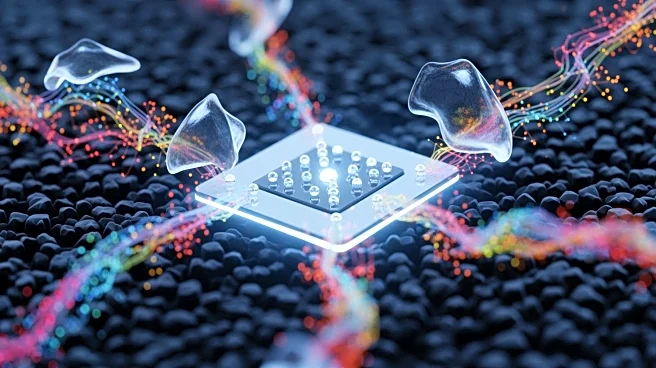
PS waste in hydrogen, breaking it down into smaller vapor molecules through hydro-pyrolysis. This method, detailed in Nature Nanotechnology, reduces the carbon footprint of toluene production by 53% and offers a cost-effective solution at $0.61/kg. The approach utilizes single-atom catalysts to enhance the efficiency and selectivity of the conversion process, overcoming traditional yield-selectivity trade-offs. The research highlights the potential of single-atom catalysts to revolutionize plastic upcycling, offering new pathways for converting waste into petrochemical feedstocks.
Why It's Important?
This innovative method addresses the growing issue of plastic waste accumulation, which poses significant environmental and health risks. By converting plastic waste into valuable chemicals, the approach not only reduces pollution but also provides an economically viable solution for the chemical industry. The reduction in carbon emissions aligns with global efforts to combat climate change and promote sustainable practices. The successful application of single-atom catalysts could lead to broader adoption in various industrial processes, enhancing efficiency and reducing environmental impact. This development represents a significant step forward in the quest for sustainable waste management solutions and could influence future policies and practices in the chemical and environmental sectors.
What's Next?
The researchers plan to further refine the reactor design to enable continuous operation and larger-scale plastic conversion. Future studies will focus on developing catalysts with enhanced selectivity to better control product distribution. The team aims to explore scalable reactor designs to support longer operation times and higher plastic throughput. If successfully implemented in real-world settings, this technology could significantly reduce plastic pollution and contribute to the development of sustainable industrial practices.