


What's Happening?
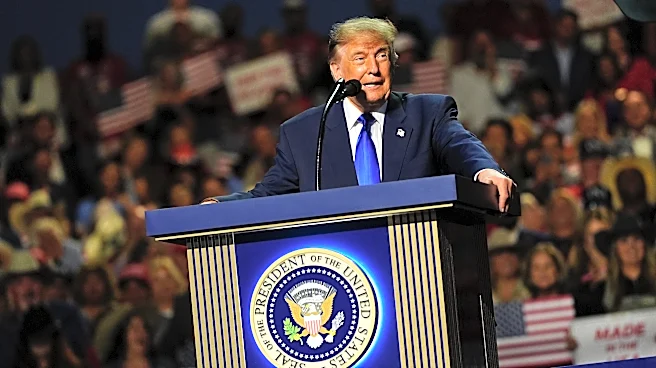
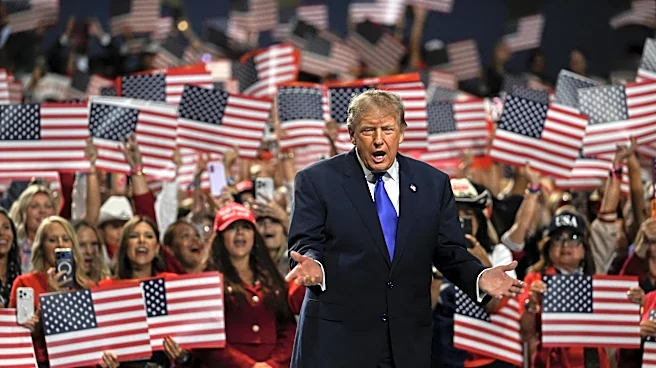
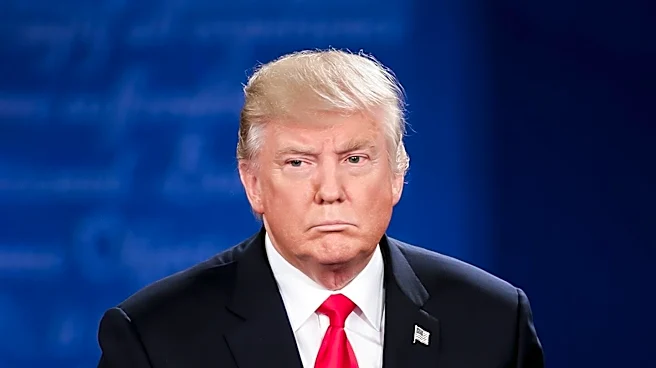
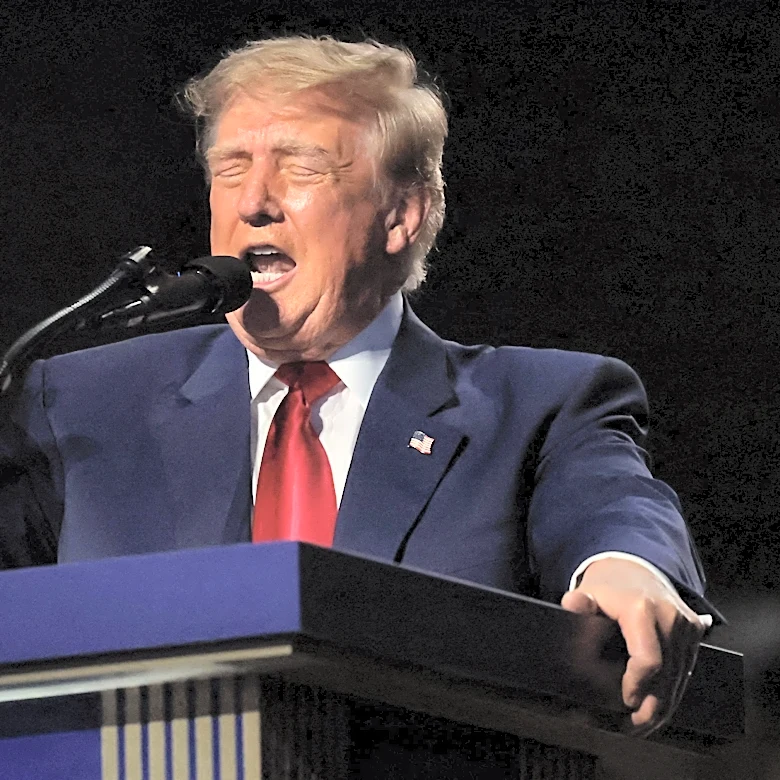
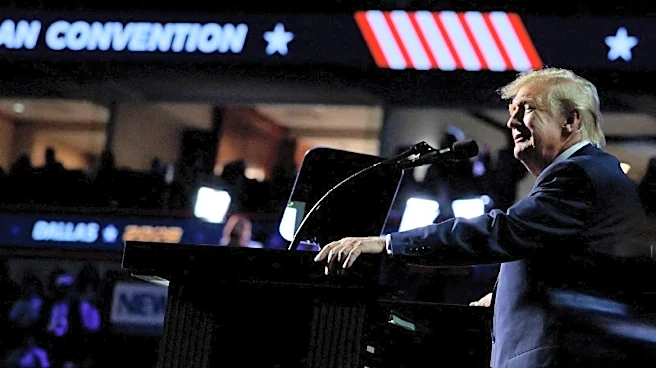
President Donald Trump, during an interview with Fox News host Laura Ingraham, downplayed the potential negative impact of a Republican loss in the upcoming midterm elections on his legacy. Speaking at the Republican midterm convention in Dallas, President Trump stated
that if Democrats were to gain control of Congress, he would act as a 'blocker' for their agenda during his remaining two years in office. He suggested that such a scenario might not be as dire as some analysts predict, indicating a willingness to make deals with Democrats. President Trump also reiterated a promise made at the convention: if Republicans maintain their majorities in both the House and Senate, he would offer $5,000 to every U.S. adult. This promise has drawn scrutiny regarding its feasibility and funding mechanisms, particularly given the national debt and the need for congressional approval.
Why It's Important?
President Trump's comments are significant as they offer insight into his strategic thinking regarding potential shifts in congressional power. His willingness to frame a Democratic takeover as a 'blocking' opportunity rather than a catastrophic loss could influence Republican messaging and voter turnout ahead of the midterms. The promise of $5,000 to every U.S. adult, contingent on Republican control of Congress, introduces a substantial economic incentive into the political discourse. This proposal could sway voters, particularly those concerned with economic relief, but also raises questions about fiscal responsibility and the practicalities of implementing such a large-scale direct payment. The discussion around this promise highlights the economic stakes of the midterm elections and the differing approaches to fiscal policy between political parties.
What's Next?
The upcoming midterm elections in November will determine the balance of power in Congress, directly impacting President Trump's ability to advance his legislative agenda. If Republicans lose their majorities, President Trump's stated strategy of acting as a 'blocker' will likely lead to increased legislative gridlock and potential clashes with a Democratic-controlled Congress. The feasibility and political viability of the $5,000 payout promise will be a key point of discussion leading up to the elections. Should Republicans retain control, the administration would face pressure to outline a concrete plan for funding and distributing such payments, which would require significant congressional action and could face opposition from fiscal conservatives. Conversely, if Democrats gain control, the promise would likely be abandoned, and the focus would shift to their legislative priorities.
Beyond the Headlines
President Trump's remarks about downplaying a potential Republican loss and his willingness to 'block' a Democratic agenda reflect a broader shift in political strategy, where the executive branch might increasingly operate as a check on legislative power rather than a partner. This could lead to a more confrontational political landscape, potentially exacerbating partisan divisions. The $5,000 payout promise, while a direct appeal to voters, also touches upon deeper economic philosophies regarding government intervention and wealth redistribution. It raises questions about the role of direct financial incentives in electoral politics and the long-term implications of such policies on national debt and economic stability. This approach could set a precedent for future election cycles, where direct financial promises become a more prominent feature of campaign platforms.