







What's Happening?
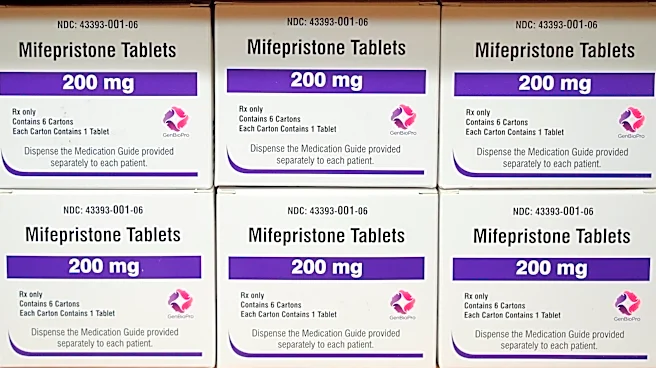
Louisiana's state attorneys have petitioned the Supreme Court to uphold a recent appeals court decision that would prevent the mailing of mifepristone, a medication used for abortions, across the United States. This request follows a ruling by the conservative
5th Circuit Court of Appeals, which reinstated a regulation requiring women to obtain the pills in person from a doctor. The appeals court's decision was put into immediate effect, but Justice Samuel A. Alito Jr. issued an administrative stay, temporarily halting the enforcement of the ruling. The Supreme Court is now tasked with determining whether Louisiana has the standing to challenge federal drug regulations and whether the judiciary can overrule the Food and Drug Administration (FDA). The FDA had previously relaxed restrictions on mifepristone, allowing it to be mailed, but is currently reviewing its safety record.
Why It's Important?
The outcome of this legal battle could significantly impact abortion access across the United States, particularly in states with strict abortion laws like Louisiana. If the Supreme Court sides with Louisiana, it could set a precedent that allows states to challenge federal drug regulations, potentially leading to more restrictive access to abortion medications. This case also highlights the ongoing tension between state and federal authorities over abortion rights, especially following the Supreme Court's decision to overturn Roe v. Wade. The decision could affect telehealth services and access to abortion in rural areas, where in-person visits to healthcare providers may be challenging. The case underscores the broader national debate over reproductive rights and the role of federal agencies in regulating medications.
What's Next?
The Supreme Court is expected to make a decision soon on whether to uphold the appeals court ruling or allow the mailing of mifepristone to continue. This decision will likely influence future legal challenges related to abortion access and federal drug regulations. Stakeholders, including abortion rights advocates and anti-abortion groups, are closely monitoring the case, as its outcome could have far-reaching implications for reproductive healthcare in the U.S. The Biden administration and the FDA may also face increased pressure to clarify and potentially revise their policies on the distribution of abortion medications.