

What's Happening?
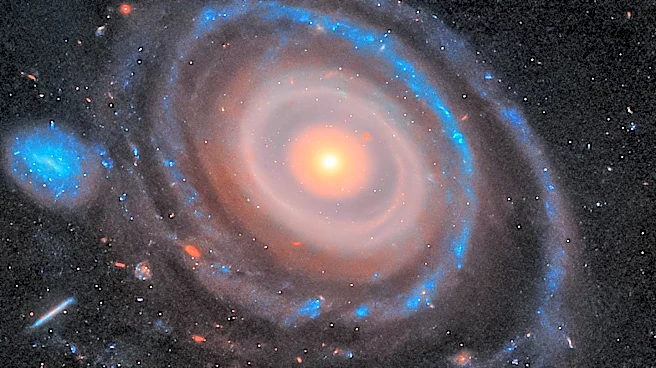
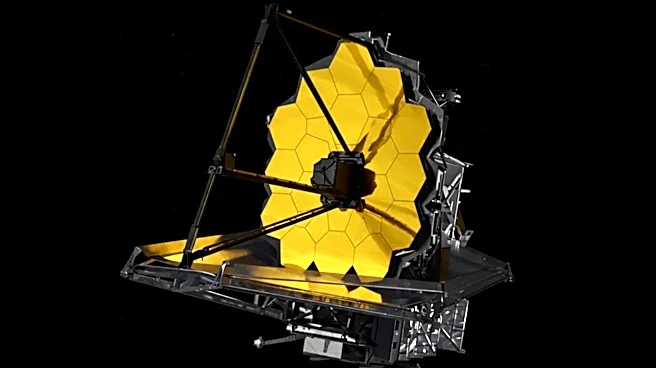
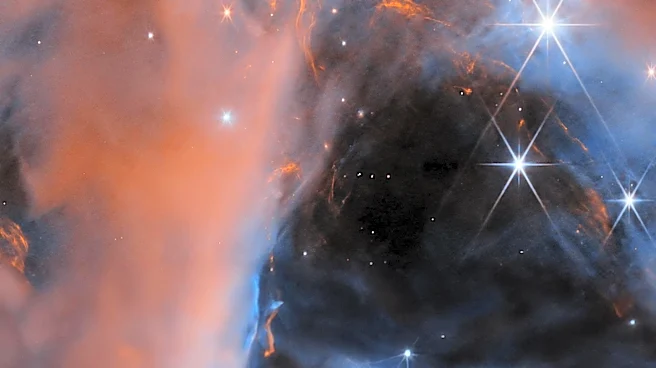
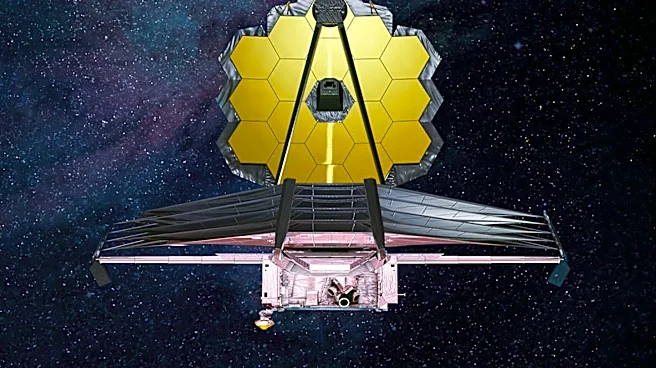
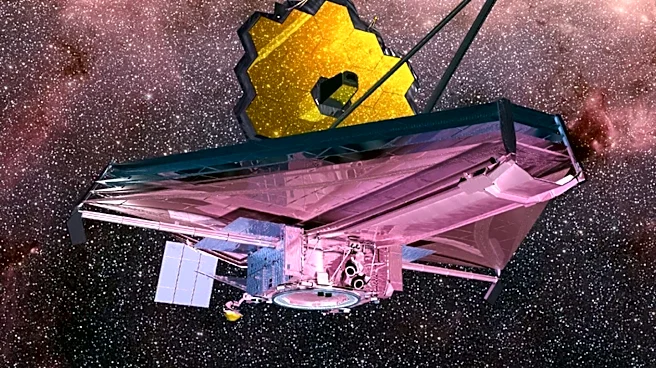
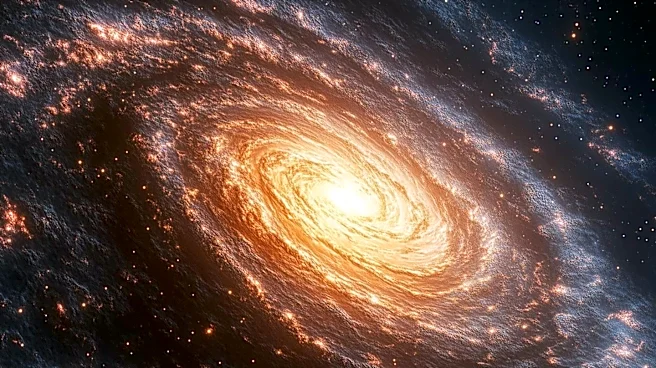
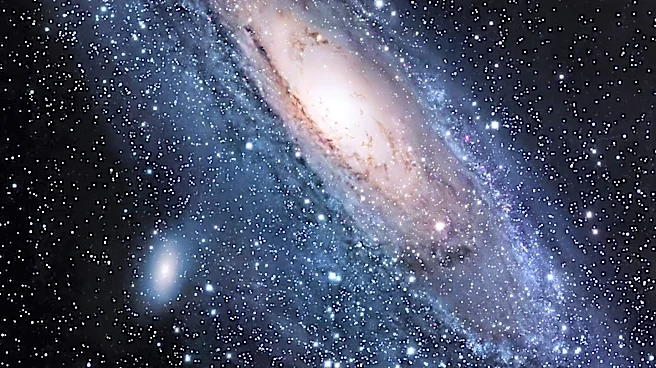
The James Webb Space Telescope, launched in December 2021, is providing unprecedented views of the universe by capturing infrared light from galaxies formed shortly after the Big Bang. Webb's ability to see infrared light allows it to observe galaxies as
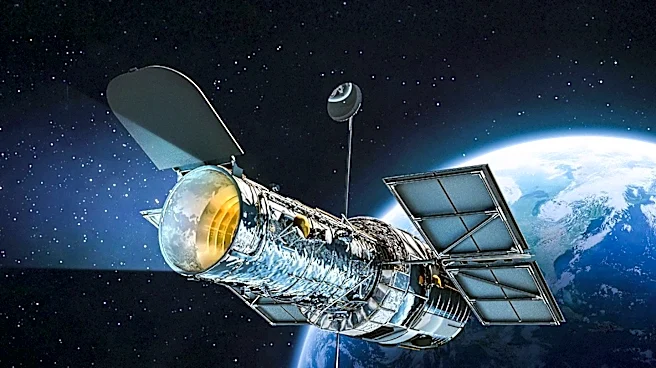
they were over 13 billion years ago. The telescope has identified galaxies like MoM-z14, whose light traveled for 13.5 billion years to reach us. These observations challenge existing models, revealing unexpectedly bright and chemically enriched galaxies from the early universe. Webb's larger mirror and infrared capabilities surpass those of the Hubble Space Telescope, enabling deeper exploration of cosmic history.
Why It's Important?
The James Webb Space Telescope's discoveries are reshaping our understanding of the early universe and the formation of galaxies. By observing galaxies from Cosmic Dawn, Webb provides insights into the conditions and processes that shaped the universe's evolution. These findings challenge existing theories and models, prompting scientists to reconsider assumptions about galaxy formation and development. Webb's capabilities open new avenues for research and exploration, advancing our knowledge of the cosmos and influencing future astronomical studies.