




What's Happening?
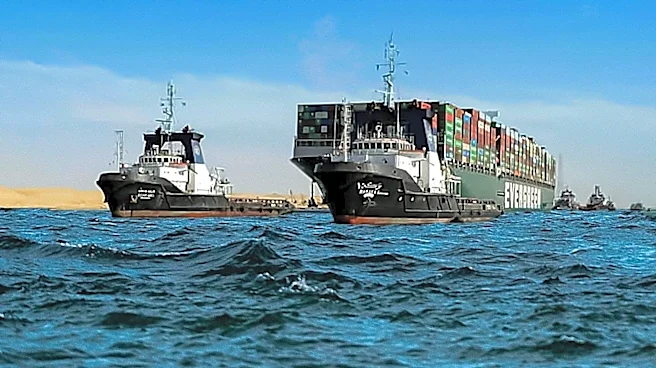
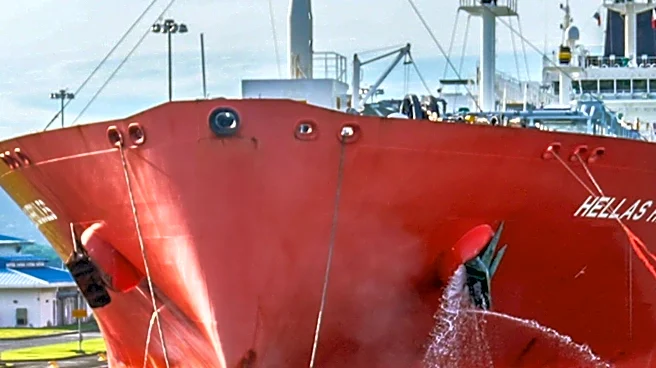
Saudi and Russian oil tankers are increasingly opting for the longer route around Africa instead of transiting the Red Sea and the Suez Canal due to heightened security threats. Six Saudi-owned Very Large Crude Carriers (VLCCs) have recently avoided the Bab
el-Mandeb Strait, adding at least two weeks to their voyages to Asia. This diversion aligns with Saudi Arabia's strategy to reroute some crude exports to Egypt's Mediterranean port of Sidi Kerir, offering Asian buyers an alternative to the risky Red Sea route. Russian exporters are also following suit, with a Panama-flagged tanker carrying Russian naphtha opting for the longer journey around Africa.
Why It's Important?
The decision to reroute oil shipments around Africa highlights the significant impact of security threats on global energy trade. The Bab el-Mandeb Strait is a critical chokepoint for global energy supplies, and disruptions in this region could lead to increased shipping costs and delays, affecting global oil markets. The move by Saudi Arabia and Russia to seek alternative routes underscores the vulnerability of maritime trade to geopolitical tensions. This development could prompt other countries and companies to reassess their shipping strategies, potentially leading to shifts in global trade patterns.
What's Next?
The ongoing security threats in the Red Sea may lead to further rerouting of oil shipments, impacting global energy supply chains. Shipping companies might seek additional security measures or insurance coverage, increasing operational expenses. The situation could prompt international diplomatic efforts to stabilize the region and ensure the safety of maritime routes. The response from major stakeholders, including Saudi Arabia, Russia, and their trading partners, will be crucial in determining the future security landscape of the Red Sea.