
What's Happening?
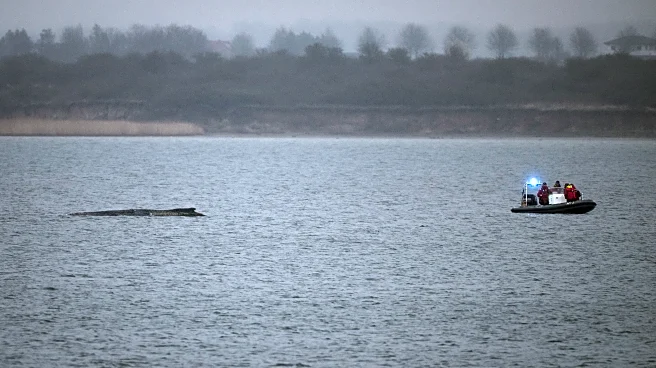
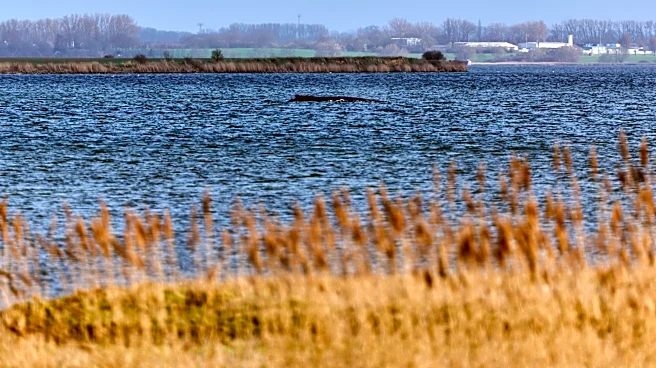
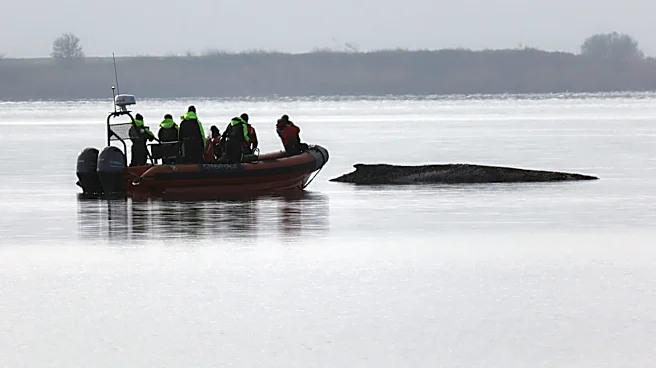
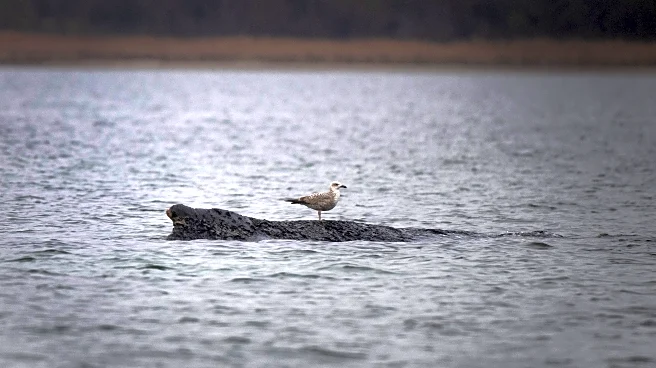
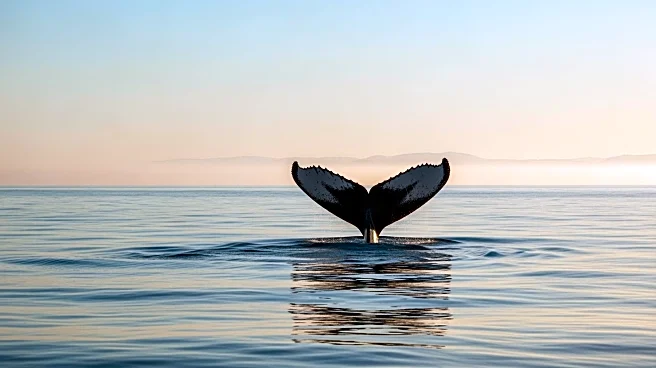
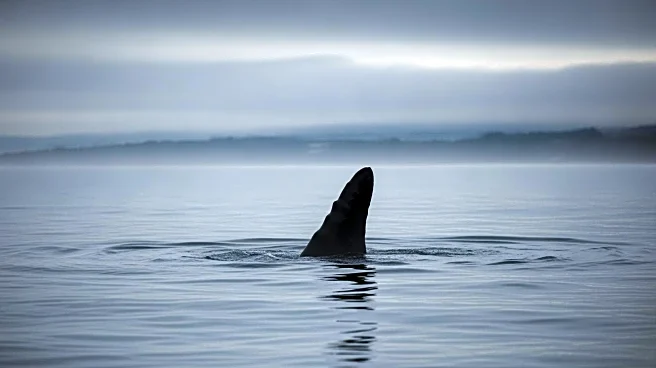
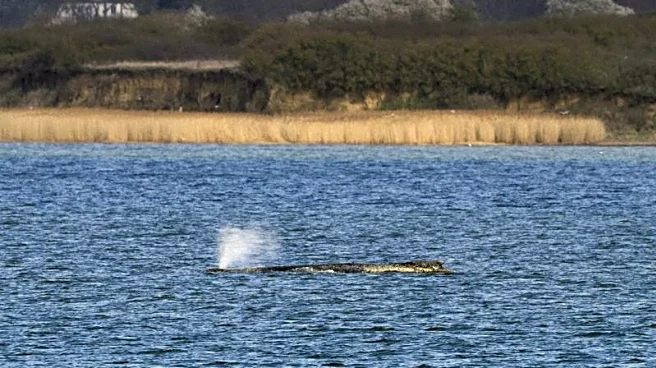
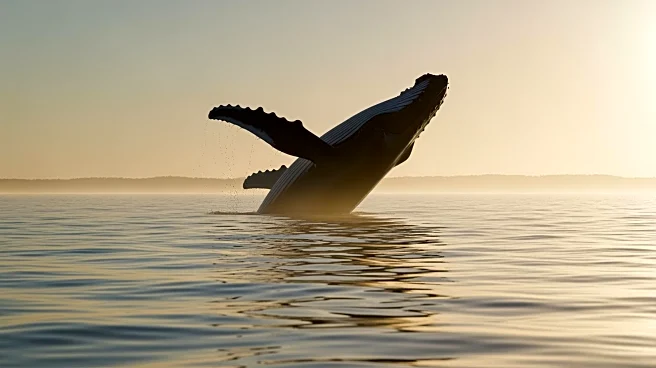
A humpback whale became stranded on a sandbank in Lübeck Bay, Germany, prompting a complex rescue operation involving police, firefighters, and marine rescue teams. Initially, the whale was estimated to be around 10 meters long, but later assessments
by the Institute for Terrestrial and Aquatic Wildlife Research (ITAW) suggested it was between 12 and 15 meters long, weighing approximately 15 tonnes. The rescue efforts included attempts to guide the whale to deeper waters using boats to create waves and cutting away fishing nets entangled around its body. Despite initial success in freeing the whale, it became stranded again in Wismar Bay, raising questions about why it ventured so far into the Baltic Sea, a region known for its shallow waters and low salinity, which are hazardous for large whales.
Why It's Important?
This incident underscores the challenges faced in marine conservation, particularly in regions like the Baltic Sea, which are not natural habitats for large whales. The repeated stranding of the whale highlights the risks posed by human activities, such as fishing, which can lead to entanglement, and the environmental conditions of the Baltic Sea that are unsuitable for such marine life. The situation draws attention to the need for improved marine management and conservation strategies to protect marine wildlife. It also raises awareness about the impact of climate change and human interference on marine ecosystems, which can lead to unusual migration patterns and increased stranding incidents.
What's Next?
The future of the stranded whale remains uncertain, as it was last seen in Wismar Bay. Authorities and marine experts may need to consider launching another rescue operation if the whale remains stranded. Long-term, this incident may prompt discussions on enhancing marine conservation efforts and developing strategies to prevent similar occurrences. It could also lead to increased research into the migration patterns of whales and the environmental factors influencing their movements, particularly in regions like the Baltic Sea.
Beyond the Headlines
The repeated stranding of the whale in the Baltic Sea highlights broader environmental and ecological issues. The Baltic Sea's low salinity and limited food supply make it a challenging environment for large marine mammals, which could lead to health issues such as skin inflammation. This situation also reflects the broader impact of climate change on marine life, as changing ocean temperatures and currents may alter traditional migration routes. Additionally, the incident raises ethical questions about human responsibility in protecting marine life and the need for international cooperation in marine conservation efforts.