







What's Happening?
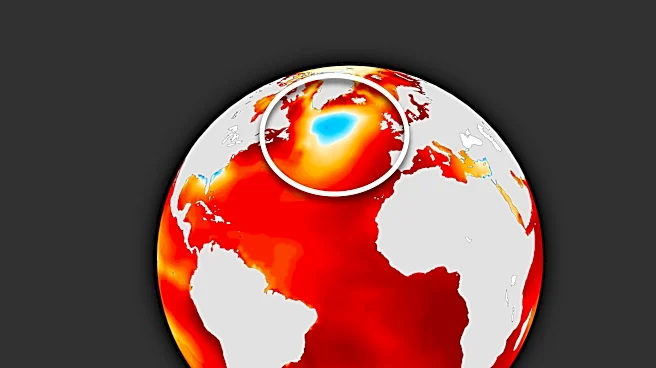
Researchers from the University of California have identified a 'cold blob' in the North Atlantic, a phenomenon that has cooled the area by up to 1 degree Celsius over recent decades. This cooling is attributed to changes in the Atlantic Meridional Overturning
Circulation (AMOC), a crucial network of ocean currents. The 'cold blob' is located south of Greenland and is known as the North Atlantic Warming Hole. Scientists warn that if the AMOC continues to weaken, it could significantly disrupt global heat distribution, potentially leading to a standstill in ocean currents. This could have widespread effects on global weather patterns, marine ecosystems, and sea levels, particularly along the U.S. East Coast.
Why It's Important?
The discovery of the 'cold blob' is significant as it highlights potential disruptions in global climate systems. The AMOC plays a vital role in regulating climate by distributing heat across the planet. A slowdown or shutdown of these currents could lead to drastic changes in weather patterns, affecting agriculture, fisheries, and coastal communities. The U.S. East Coast could experience accelerated sea level rise, impacting infrastructure and increasing the risk of flooding. Understanding these changes is crucial for developing strategies to mitigate the impacts of climate change and protect vulnerable regions.
What's Next?
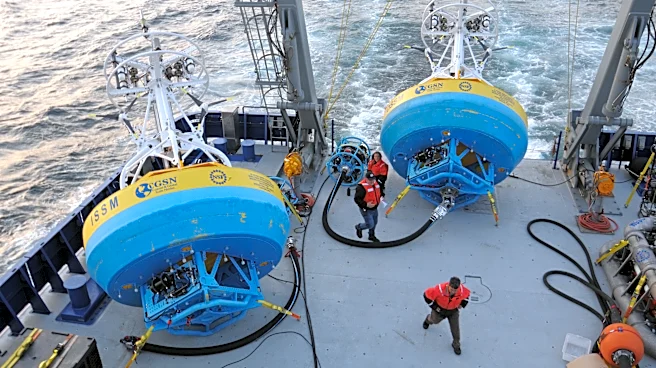
Scientists will continue to monitor the 'cold blob' and the AMOC to better understand the long-term implications of these changes. Further research is needed to predict how these oceanic shifts will affect global weather patterns and to develop adaptive strategies for affected regions. Policymakers may need to consider these findings in climate action plans and infrastructure development to mitigate potential impacts on coastal communities.
Beyond the Headlines
The 'cold blob' phenomenon underscores the complexity of climate change and the interconnectedness of global systems. It raises questions about the resilience of current climate models and the need for more comprehensive data to predict future changes accurately. This development also highlights the importance of international collaboration in climate research and policy-making to address the global nature of these challenges.