




What's Happening?
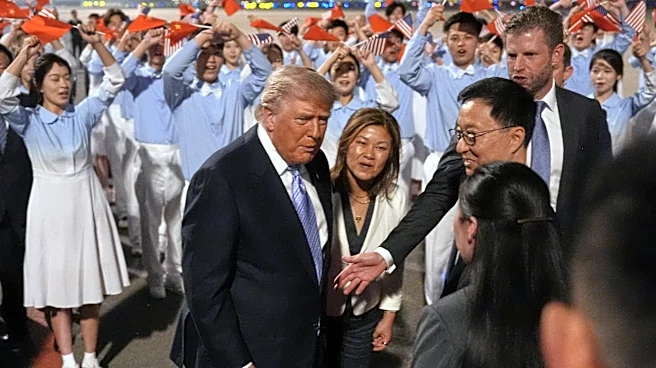
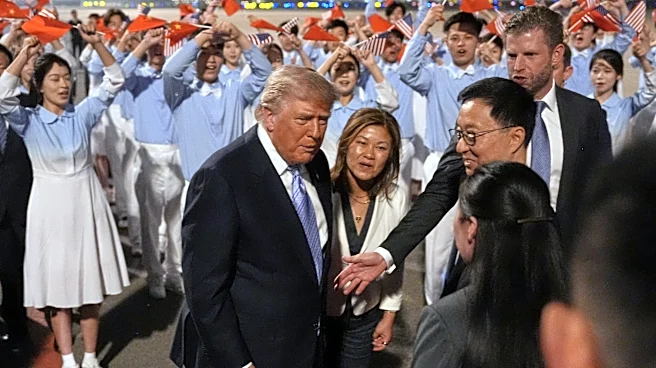
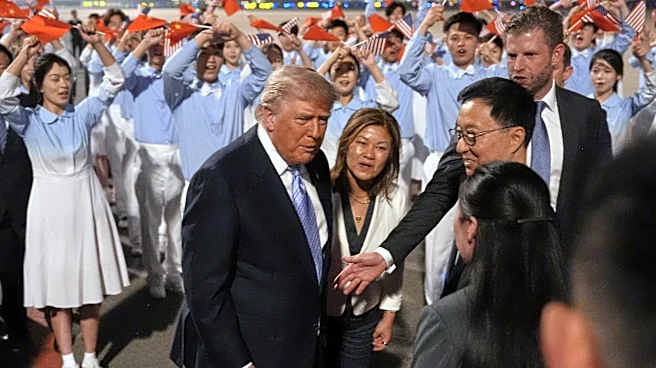
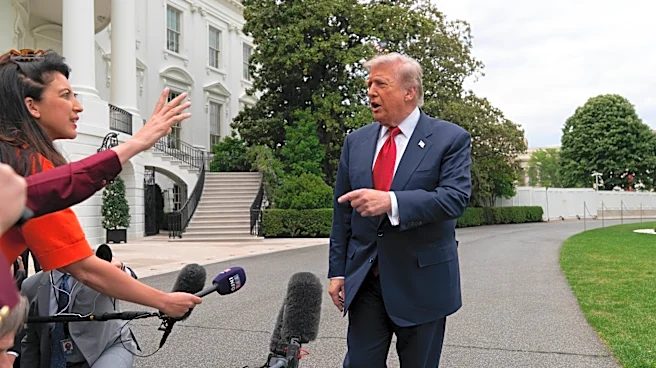
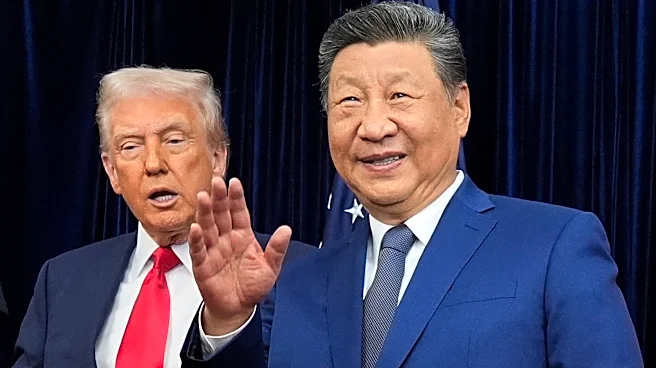
President Trump has arrived in Beijing to discuss key issues including Tehran, Trade & Tariffs, and Taiwan. A significant backdrop to these talks is China's reliance on Iranian oil imports. Despite China's large appetite for crude, it generates 85% of
its energy needs from internal resources, providing some flexibility in energy sourcing. This strategic energy resourcing means China is less vulnerable to disruptions in Gulf oil supplies. However, Iran is heavily reliant on China, with 80-90% of its oil exports going there. The ongoing sanctions on Iran's oil fleet complicate its ability to find alternative markets.
Why It's Important?
The discussions in Beijing are crucial as they highlight the complex interdependencies between major global economies. China's ability to maintain energy independence despite sanctions on Iran underscores its strategic planning. For the U.S., leveraging China's influence over Iran could be challenging given China's robust energy strategy. The outcome of these talks could influence global oil markets and geopolitical dynamics, particularly in the Gulf region. The situation also reflects broader strategic considerations, as China balances its energy needs with geopolitical alliances.
What's Next?
Future developments will likely focus on how China manages its energy imports amidst geopolitical tensions. The U.S. may continue to seek ways to influence China's stance on Iran, potentially through diplomatic or economic channels. The situation could also prompt China to further diversify its energy sources, reducing reliance on any single supplier. Observers will be watching for any shifts in China's energy policy or changes in its diplomatic approach to the Gulf region.