

What's Happening?
Greenpeace has initiated a legal challenge against the UK government regarding its decision to transfer two Pacific Ocean exploration licenses to Glomar Minerals. The environmental group argues that this decision may violate both domestic and international
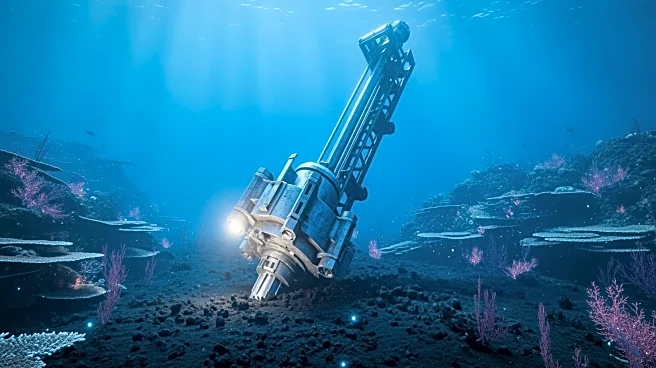
laws. The licenses, located in the Clarion Clipperton Zone, cover a vast area rich in polymetallic nodules. Greenpeace contends that the mining activities threaten marine life and that the UK government should have reconsidered its sponsorship following the bankruptcy of the previous license holder, Loke Marine Minerals. The group also raises concerns about Glomar's ownership and management, which are largely based overseas, and its connections to controversial deep sea mining policies.
Why It's Important?
This legal challenge highlights the growing environmental and legal scrutiny surrounding deep sea mining activities. The outcome of this case could set a precedent for how governments engage with and regulate the deep sea mining industry, particularly in terms of environmental protection and international law compliance. The case also underscores the tension between economic interests in resource extraction and the need to preserve marine ecosystems. If successful, Greenpeace's challenge could lead to stricter regulations and increased transparency in the licensing process, potentially influencing global policies on deep sea mining.
What's Next?
If the UK Business Secretary does not respond to Greenpeace's pre-action protocol letter within two weeks, the organization plans to file a formal legal claim. This could lead to a court case that examines the legality of the license transfer and the broader implications for UK government policy on deep sea mining. The case may also prompt other environmental groups to challenge similar government decisions, potentially leading to a reevaluation of international mining agreements and practices.