
What's Happening?
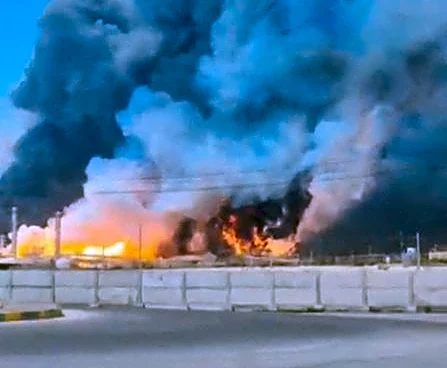
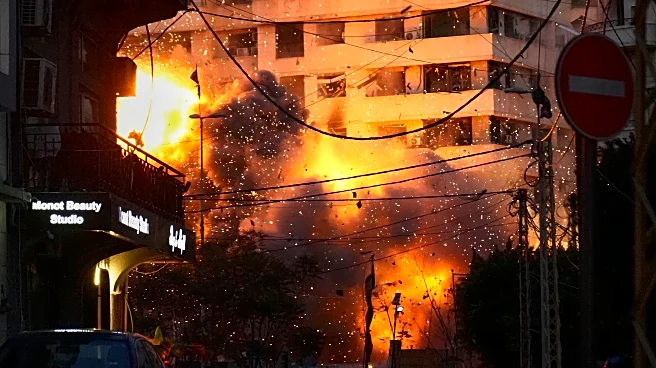
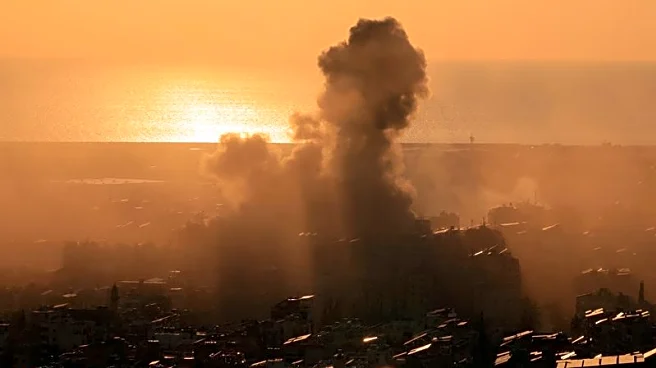
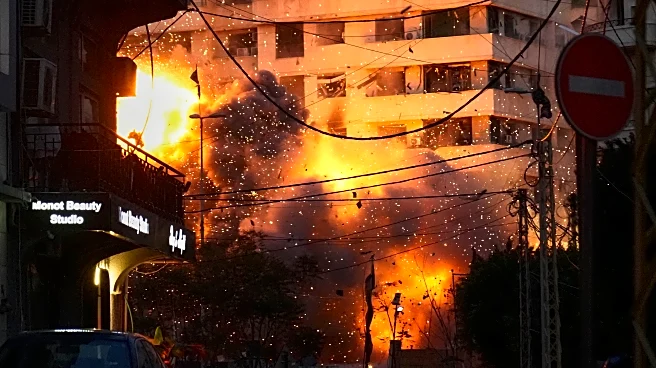
The conflict between Israel and Lebanon has intensified, resulting in over 1,000 deaths due to Israeli bombardment. The escalation began after Hezbollah, a Lebanese armed group, launched rockets into northern Israel in response to the killing of Iranian
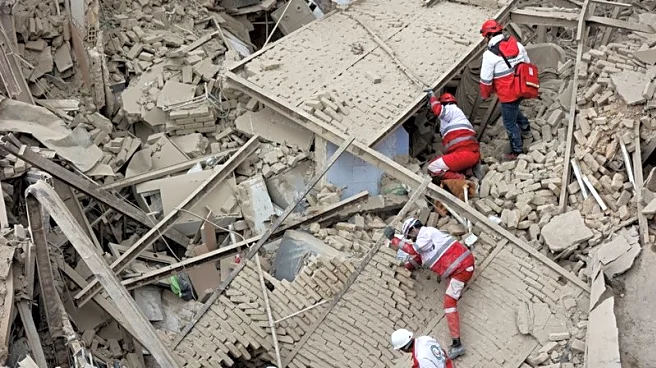
Supreme Leader Ayatollah Ali Khamenei. The Israeli military has targeted residential areas and infrastructure in Lebanon, claiming to focus on Hezbollah. The Lebanese Ministry of Health reports that the attacks have killed 1,001 people, including women, children, and healthcare workers, and injured over 2,584 individuals. The United Nations and rights groups have raised concerns that these actions may constitute war crimes, urging Israel to cease attacks on healthcare facilities.
Why It's Important?
The ongoing conflict has significant implications for regional stability and international relations. The humanitarian crisis in Lebanon is exacerbated by the displacement of over a million people and the targeting of healthcare facilities, which could lead to a broader humanitarian disaster. The international community, including countries like Canada, the UK, Germany, Italy, and France, has condemned the violence and called for adherence to international humanitarian law. The escalation risks drawing in more regional actors and could lead to a prolonged conflict, affecting global diplomatic and economic interests.
What's Next?
Efforts to de-escalate the situation are underway, with international leaders urging restraint and dialogue. French Foreign Minister Jean-Noel Barrot has engaged in talks with Lebanese President Joseph Aoun, expressing France's willingness to mediate and increase humanitarian aid. The potential for an expanded Israeli ground offensive remains a concern, with calls for all parties to adhere to international law to prevent further casualties and displacement. The situation remains volatile, with diplomatic efforts crucial in averting a prolonged conflict.
Beyond the Headlines
The conflict highlights the complex geopolitical dynamics in the Middle East, where historical grievances and alliances play a significant role. The targeting of healthcare facilities raises ethical and legal questions about the conduct of war and the protection of civilians. The international community's response will be critical in shaping future engagements in the region, potentially influencing global norms on conflict resolution and humanitarian intervention.