








What's Happening?
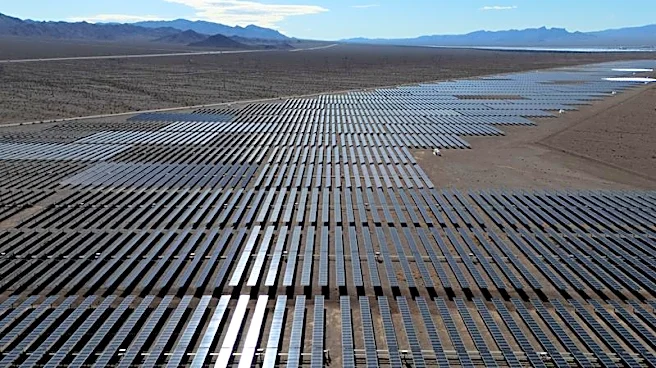
The Trump administration has announced a $700 million initiative to support the struggling U.S. coal industry, focusing on coal-fired power plants and coal exports. This move comes as solar power continues to grow in the U.S., recently surpassing coal in electricity
generation for the first time. Despite federal policies favoring coal, solar energy remains the leading source of new power, with significant investments in solar and battery storage. The administration has also canceled several solar and wind projects and terminated $7 billion in funding for affordable solar energy projects. Critics argue that these policies hinder the growth of renewable energy, which is crucial for reducing carbon emissions.
Why It's Important?
The administration's focus on coal over renewable energy has significant implications for the U.S. energy landscape. While coal is a traditional energy source, its environmental impact and declining economic viability make it less favorable compared to renewables like solar and wind. The continued growth of solar energy, despite federal opposition, highlights a shift in energy investment priorities driven by market forces and environmental concerns. This shift could affect energy prices, job creation in the renewable sector, and the U.S.'s ability to meet climate goals. The administration's policies may also impact international perceptions of U.S. commitment to clean energy.
What's Next?
The administration's support for coal is likely to face legal and political challenges, especially from environmental groups and states investing in renewable energy. The ongoing lawsuits against the cancellation of solar projects and the potential for further regulatory changes could influence the future of U.S. energy policy. Additionally, as solar and wind technologies continue to advance and become more cost-effective, they may further outpace coal, prompting a reevaluation of energy strategies at both federal and state levels.