



What's Happening?
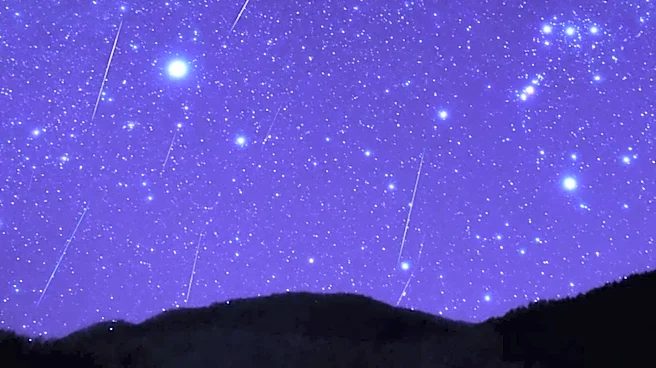
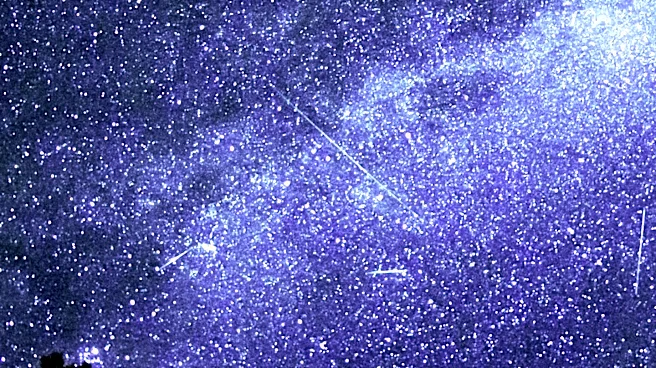
The Perseids meteor shower, a well-known celestial event, is mentioned in the context of general meteor shower observations and tips. However, specific details regarding Perseids observations for October 25, 2026, are not provided in the available information.
The sources primarily focus on the Quadrantids meteor shower, which peaks in January, offering extensive guidance on its observation, including peak times, expected meteor rates, lunar conditions, and optimal viewing locations. While the Perseids are acknowledged as a significant meteor shower, the provided texts do not offer any direct information or forecasts for their visibility or activity on the specified October date. One source briefly references a 'Perseids 2026 guide' for comparison with winter viewing sessions, implying its occurrence in summer, but offers no further specifics for October.
Why It's Important?
The absence of specific information regarding the Perseids meteor shower for October 25, 2026, is important for astronomy enthusiasts and the public planning sky-gazing activities. Without concrete data on peak times, visibility, or expected meteor rates for this particular date, observers cannot adequately prepare or set expectations. This highlights a potential gap in readily available public astronomical forecasts for specific, less prominent occurrences outside of major, well-publicized events like the Quadrantids. For those interested in meteor showers, accurate and timely information is crucial for successful observation, as factors like moonlight, radiant position, and local light pollution significantly impact visibility. The focus on other meteor showers suggests that the Perseids may not be active or prominent during late October, or that information for that period is not widely disseminated.
What's Next?
For those interested in observing meteor showers, the immediate next step would be to consult more specialized astronomical calendars or organizations that provide detailed forecasts for less prominent or off-peak meteor shower activity. Given the current information, it is unlikely that the Perseids will be a significant event on October 25, 2026. Future updates from astronomical bodies like the International Meteor Organization (IMO) or NASA might offer more precise details if any unusual activity is anticipated. Observers should continue to monitor official astronomical sources for specific dates and times of meteor showers, as these events are highly dependent on celestial mechanics and can sometimes have unexpected variations.
Beyond the Headlines
The broader implication of this information gap underscores the challenge of tracking and publicizing all celestial events. While major meteor showers like the Perseids and Quadrantids receive considerable attention, the vast number of minor showers or off-peak activity periods often go unnoticed by the general public. This situation highlights the role of dedicated astronomical societies and specialized publications in providing comprehensive data for enthusiasts. It also subtly points to the seasonal nature of meteor showers, with the Perseids typically being a summer phenomenon, making their mention in an October context without further detail potentially misleading for casual observers. The emphasis on dark-sky locations and observational tips for other showers reinforces the general best practices for meteor shower viewing, regardless of the specific event.