





What's Happening?
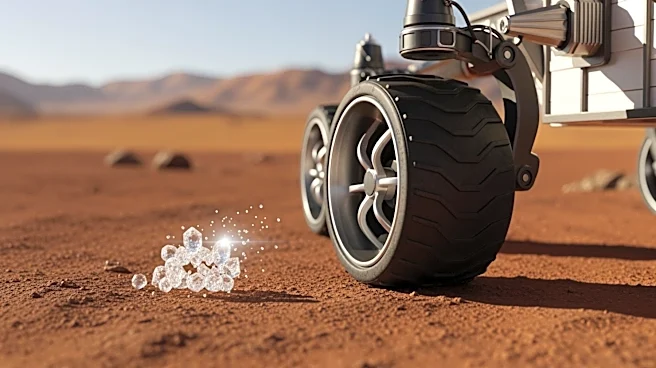
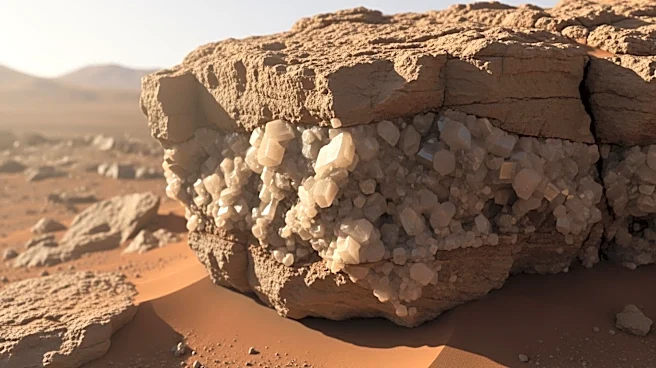
NASA's Curiosity rover has discovered the most diverse collection of organic molecules ever found on Mars, according to a new study published in Nature Communications. The rover drilled a rock sample, nicknamed 'Mary Anning 3', from Mount Sharp, an area
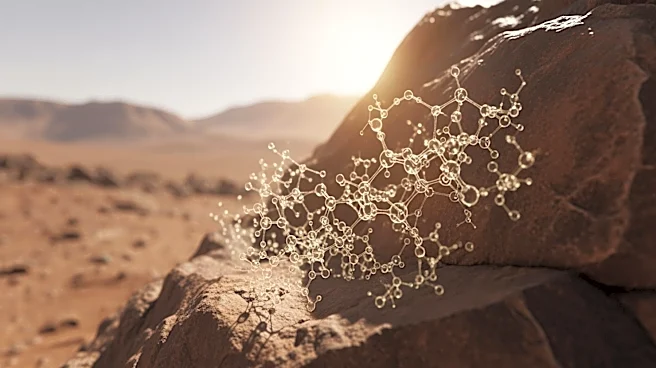
once covered by lakes and streams. This sample revealed 21 carbon-containing molecules, seven of which were detected for the first time on Mars. These findings suggest that ancient Mars had the right chemistry to support life. Among the newly identified molecules is a nitrogen heterocycle, a structure considered a precursor to RNA and DNA. The discovery of these molecules, preserved in rocks despite billions of years of exposure to radiation, adds to the growing evidence that Mars could have supported life in its ancient past.
Why It's Important?
The discovery of diverse organic molecules on Mars is significant as it enhances the understanding of the planet's potential to have supported life. These findings suggest that Mars had the necessary chemical conditions for life, which could influence future missions and research focused on the search for past life on the planet. The presence of nitrogen heterocycles, which are precursors to genetic material, indicates that Mars had complex organic chemistry. This discovery could guide future exploration strategies and the development of new technologies to detect signs of life on Mars and other celestial bodies. The research also demonstrates the capabilities of the Curiosity rover and its instruments, paving the way for more advanced missions.
What's Next?
NASA's Curiosity rover will continue to explore Mars, using its remaining resources to analyze other promising sites. The mission team plans to publish further findings from recent explorations, including those involving the rover's second and final use of a powerful chemical solution to analyze samples. These efforts will contribute to a deeper understanding of Mars' geological history and its potential to have harbored life. Future missions, such as the European Space Agency's Rosalind Franklin rover and NASA's Dragonfly mission to Saturn's moon Titan, will build on these findings, using similar technologies to explore other parts of the solar system for signs of life.
Beyond the Headlines
The discovery of organic molecules on Mars raises questions about the planet's past environment and its ability to support life. It also highlights the importance of international collaboration in space exploration, as future missions will involve partnerships between NASA and other space agencies. The findings could influence the search for life beyond Earth, encouraging the development of new technologies and methodologies for detecting life in extreme environments. Additionally, the research underscores the need for continued investment in space exploration to unlock the mysteries of our solar system and beyond.