


What's Happening?
Arizona Public Service (APS) is seeking approval for a 14% rate increase that would raise the average residential customer's utility bill by approximately $240 annually. This proposed hike, if approved, would mark the third rate increase for customers
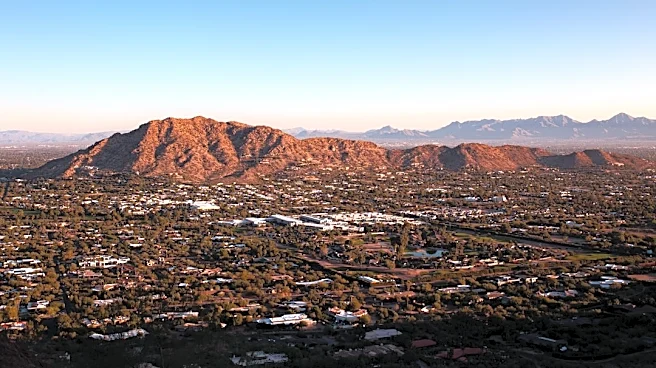
within the last five years. Concurrently, APS is advocating for the implementation of 'formula rates,' a mechanism that would permit annual price adjustments with reduced regulatory oversight and public input. This comes as APS is expanding its fossil gas operations, including the planned Desert Sun Power Plant and the Redhawk Expansion Project, which involves the construction of eight new methane gas-fired generating turbines in Maricopa County. This expansion is occurring despite Maricopa County consistently ranking among the areas with the worst air quality, according to the American Lung Association’s State of the Air Report. The utility is also reportedly abandoning its clean energy targets and zero-carbon commitments, and reneging on its pledge to retire the Four Corners coal plant by 2031, as detailed in a new report by the Sierra Club and Synapse Energy Economics.
Why It's Important?
The proposed rate hike and the introduction of 'formula rates' by Arizona Public Service (APS) could significantly impact residential customers in Arizona, leading to higher utility bills and reduced public influence over future price adjustments. The expansion of fossil gas operations, particularly in Maricopa County, raises concerns about increased air pollution and potential public health harms in an area already struggling with air quality issues. This strategic shift away from clean energy targets and zero-carbon commitments by a major utility could undermine broader efforts to transition to renewable resources and mitigate climate impacts. Ratepayers may face decades-long financial burdens due to the long-term investment in fossil fuels, which are subject to price volatility. The current Power Supply Adjuster mechanism, where ratepayers cover 100% of the difference if gas prices exceed APS's projections, further exposes customers to financial risks. This situation highlights a potential conflict between utility profit motives and public interest in affordable, clean energy.
What's Next?
The proposed 14% rate hike and the implementation of 'formula rates' by Arizona Public Service (APS) are currently awaiting approval. Public input and regulatory oversight will be crucial in determining the outcome of these proposals. Environmental and consumer advocacy groups, such as the Sierra Club and Arizona AANHPI Advocates, are actively voicing their concerns, emphasizing the potential for increased utility bills, worsening climate impacts, and public health harms. These groups are advocating for APS to prioritize ratepayers by investing in clean, renewable resources and adopting a fuel cost-sharing mechanism to protect consumers from rising fuel costs. The debate surrounding these proposals will likely involve discussions on the economic viability of fossil gas versus renewable energy, the role of regulatory bodies in protecting consumer interests, and the long-term environmental and health implications for Arizona residents. The decision on these proposals will set a precedent for future energy policy and utility practices in the state.
Beyond the Headlines
The actions of Arizona Public Service (APS) extend beyond immediate rate increases and infrastructure projects, touching upon fundamental ethical and long-term societal implications. The utility's decision to expand fossil gas operations while simultaneously abandoning clean energy targets raises questions about corporate responsibility in addressing climate change and public health. This move could lock Arizona into a prolonged dependence on fossil fuels, potentially hindering the state's ability to meet future environmental goals and adapt to a changing energy landscape. The proposed 'formula rates' could erode democratic oversight of essential services, shifting more power to the utility and reducing accountability to the public. Furthermore, the disproportionate impact of air pollution on communities in Maricopa County, already facing poor air quality, highlights environmental justice concerns. The financial burden on ratepayers, particularly students and future generations, who will bear the costs of these long-term investments, underscores the intergenerational equity issues at play. This situation reflects a broader national challenge of balancing energy demand, economic interests, and environmental stewardship.