






What's Happening?
Human activities are systematically influencing fish behavior, leading to significant changes in fish populations and posing challenges for species conservation and fisheries management. Research indicates that factors such as habitat alteration, pollution,
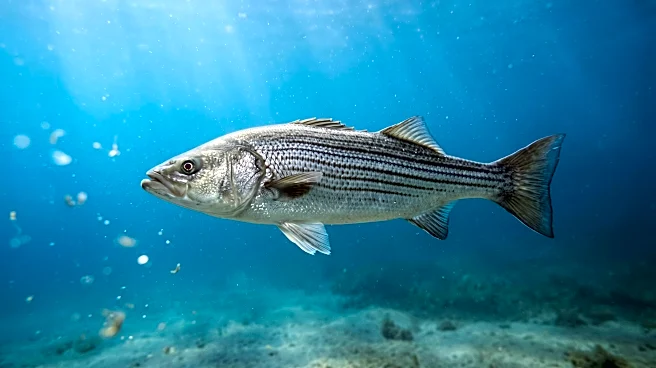
migration barriers, and intensive fishing exert selective pressures that differ from natural environmental factors. For instance, recreational fishing tends to remove bolder and more active fish, leading to increased shyness in heavily fished areas. This behavioral shift can alter fish distribution, predator-prey relationships, and competitive dynamics within aquatic ecosystems. Environmental pollutants, such as pharmaceutical contaminants, can also affect fish activity levels, making them more susceptible to predators. Additionally, artificial light at night can disrupt species interactions, and interbreeding with escaped farmed salmon can lead to the loss of locally adapted behaviors in wild populations. These human-induced changes highlight a critical need to consider behavioral diversity in conservation strategies.
Why It's Important?
The alteration of fish behavior due to human activities has profound implications for the stability and resilience of fish communities and the sustainability of fisheries. Behavioral diversity acts as a crucial reservoir for adaptation to environmental changes, strengthening a population's ability to withstand disturbances. When human activities reduce this diversity, fish populations become more vulnerable. For example, the selective fishing of coastal cod stocks in Iceland, which favored migratory offshore stocks, negatively impacted coastal fisheries. Similarly, the loss of diverse spawning times and migration distances in Pacific salmon due to environmental pressures could destabilize regional fishery yields. Recognizing behavioral diversity as a key aspect of biological diversity is essential for effective management. Without considering these behavioral shifts, conservation efforts may fail to protect species adequately, leading to long-term ecological and economic consequences for fisheries and aquatic ecosystems.
What's Next?
Researchers recommend that species and population conservation strategies increasingly incorporate behavioral diversity. This includes implementing tailored management measures, such as 'harvest slot' regulations that protect both small and very large fish, as larger fish often exhibit bold behaviors crucial for reproduction. Reducing selective fishing pressure by distributing it more widely across locations and promoting diverse habitats are also suggested approaches to foster behavioral diversity. In aquaculture, providing varied conditions can help individuals develop diversified behaviors, potentially increasing their survival rates upon release into the wild. The ongoing development of modern methods like biotelemetry will be crucial for assessing dynamic fish behavior in the wild, enabling more informed decisions for fisheries management and species conservation. Future efforts will likely focus on integrating these behavioral insights into policy and practice to build more resilient fish populations.
Beyond the Headlines
The deeper implications of human-induced behavioral changes in fish extend beyond immediate conservation concerns, touching upon the fundamental understanding of ecological evolution and the ethical responsibilities of human interaction with natural systems. The concept that human activities can drive rapid evolutionary changes in behavior underscores the pervasive and often subtle impact of anthropogenic pressures. This raises ethical questions about the extent of human influence on natural selection and the long-term consequences for biodiversity. Legally, recognizing behavioral diversity as a component of biological diversity could lead to new frameworks for environmental protection and resource management, potentially influencing regulations on fishing practices, pollution control, and habitat preservation. Culturally, a greater awareness of these behavioral shifts might foster a more nuanced appreciation for the complexity of aquatic life and encourage more sustainable practices, shifting the focus from mere population numbers to the intricate dynamics of species interactions and adaptations.