
What's Happening?
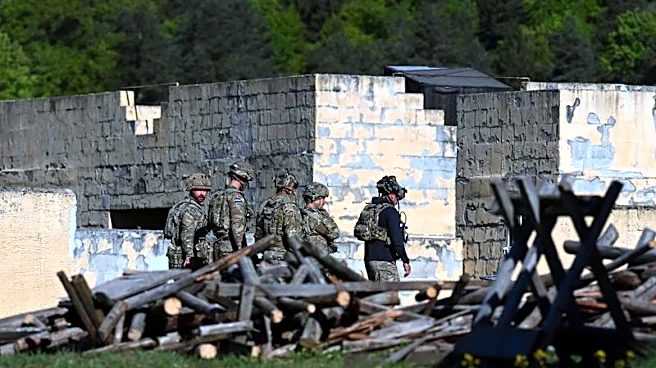
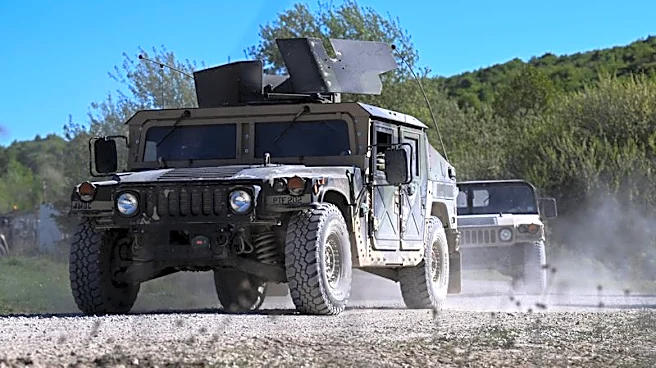
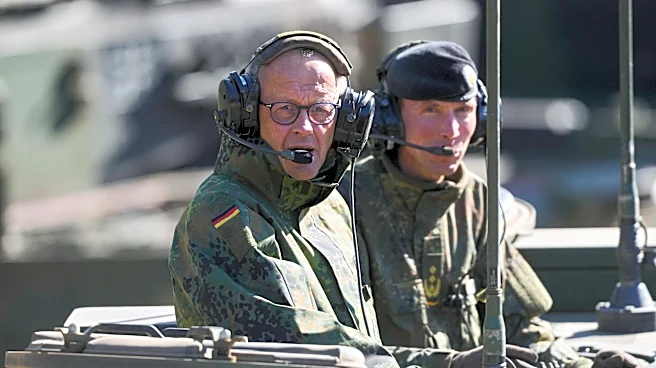
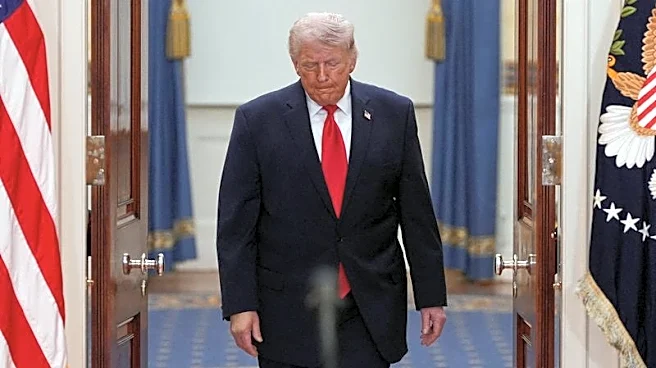
The United States has announced plans to withdraw 5,000 troops from Germany, a move that has sparked concerns among European allies and bipartisan resistance in Washington. The decision, part of President
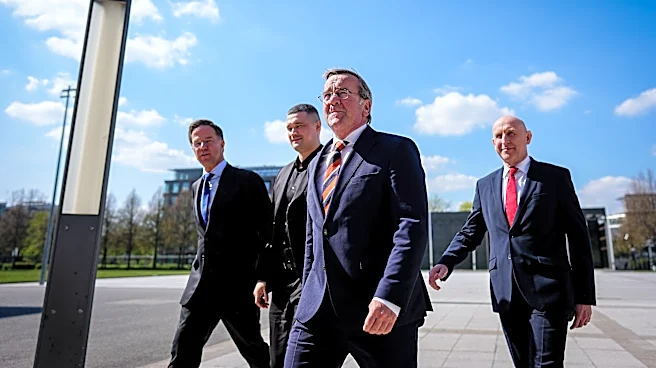
Trump's strategy to reduce the American military presence in Europe, follows a thorough review of the Department of Defense's force posture in the region. The withdrawal is expected to be completed over the next six to twelve months, bringing U.S. troop levels in Europe back to pre-2022 levels. This decision comes amid tensions between President Trump and European leaders over their reluctance to support the U.S. campaign against Iran. German Defense Minister Boris Pistorius acknowledged the drawdown as expected, emphasizing the mutual benefits of American military presence in Europe.
Why It's Important?
The withdrawal of U.S. troops from Germany is significant as it reflects a shift in U.S. military strategy and its commitment to European security. The move has raised concerns about the potential weakening of NATO's deterrence capabilities against Russian aggression. European nations, particularly Germany, may need to increase their defense spending and take on more responsibility for regional security. The decision also highlights ongoing tensions between the U.S. and its European allies, particularly regarding differing approaches to the conflict with Iran. The reduction in troop presence could impact U.S. military operations in the Middle East and Africa, where Germany serves as a key logistics hub.
What's Next?
The withdrawal is expected to proceed over the next six to twelve months, with potential implications for U.S.-European relations and NATO's strategic posture. European allies may respond by increasing their defense budgets and seeking greater autonomy in security matters. The U.S. Congress, particularly Democrats and some Republicans, may push for a review of the decision, citing concerns about its impact on transatlantic security and deterrence against Russia. The Pentagon will need to coordinate with NATO and European partners to manage the transition and address any operational challenges that arise from the troop reduction.