
What's Happening?
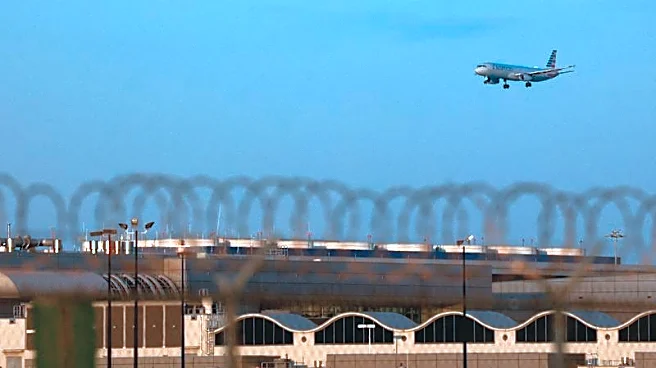
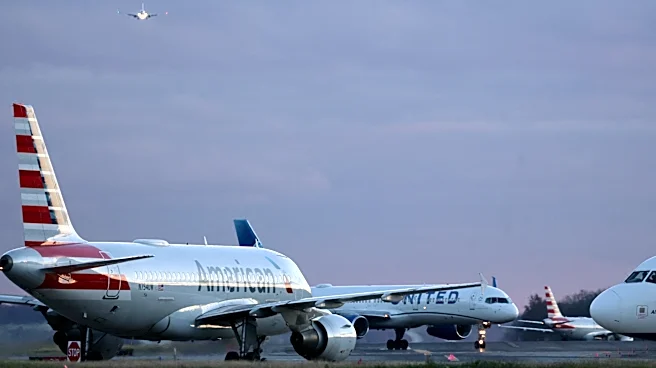
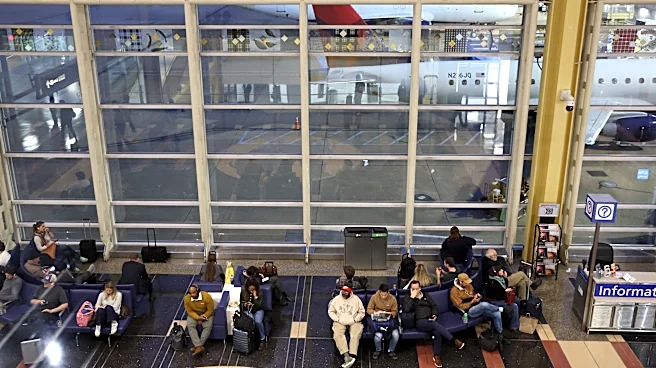
The Federal Aviation Administration (FAA) issued a nationwide ground stop on Friday, significantly impacting operations at Pittsburgh International Airport. This directive was a direct response to a communications
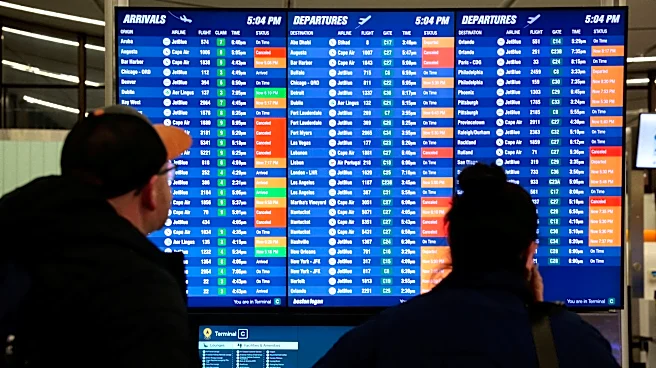
issue that affected regional air traffic control centers across the United States. The ground stop meant that all U.S. flights were temporarily halted, leading to widespread disruptions in air travel. The specific nature of the communications problem was not immediately detailed, but its broad impact necessitated a comprehensive grounding of flights to ensure safety and prevent potential air traffic control complications. This event caused delays and cancellations, affecting numerous travelers and airline schedules throughout the day.
Why It's Important?
This nationwide ground stop highlights the critical reliance of the U.S. air travel system on robust and uninterrupted communication infrastructure. A single point of failure, such as a communications issue within regional air traffic control, can cascade into a national crisis, grounding thousands of flights and stranding passengers. For Pittsburgh International Airport, this meant immediate operational challenges, including managing delayed departures and arrivals, rebooking passengers, and coordinating with airlines. Economically, such disruptions can lead to significant financial losses for airlines due to fuel costs, crew salaries, and compensation for affected passengers. Furthermore, it underscores the vulnerability of modern transportation systems to technical glitches and the need for resilient backup systems to maintain continuity and public confidence in air travel safety.
What's Next?
Following the resolution of the communications issue, the FAA will likely conduct a thorough investigation to identify the root cause of the problem and implement measures to prevent future occurrences. This could involve upgrading communication systems, enhancing cybersecurity protocols, or developing more robust contingency plans for technical failures. Airlines and airports, including Pittsburgh International, will focus on recovering from the operational backlog, rescheduling flights, and accommodating passengers affected by the ground stop. Travelers should anticipate potential lingering delays as the system normalizes. The incident may also prompt a broader review of national air traffic control infrastructure and its resilience against technical disruptions.
Beyond the Headlines
The incident raises broader questions about the aging infrastructure of the U.S. air traffic control system and the potential for technological vulnerabilities to impact national transportation. Beyond the immediate inconvenience, such events can erode public trust in the reliability of air travel and highlight the need for continuous investment in modernizing critical national systems. It also underscores the interconnectedness of global travel, as disruptions in one country can have ripple effects worldwide. The incident serves as a stark reminder that even in an era of advanced technology, fundamental communication systems remain the backbone of complex operations, and their failure can have far-reaching consequences.